Steep Pitches, Tall Peaks, Odd Angles: Can Every Roofline Be Lit?
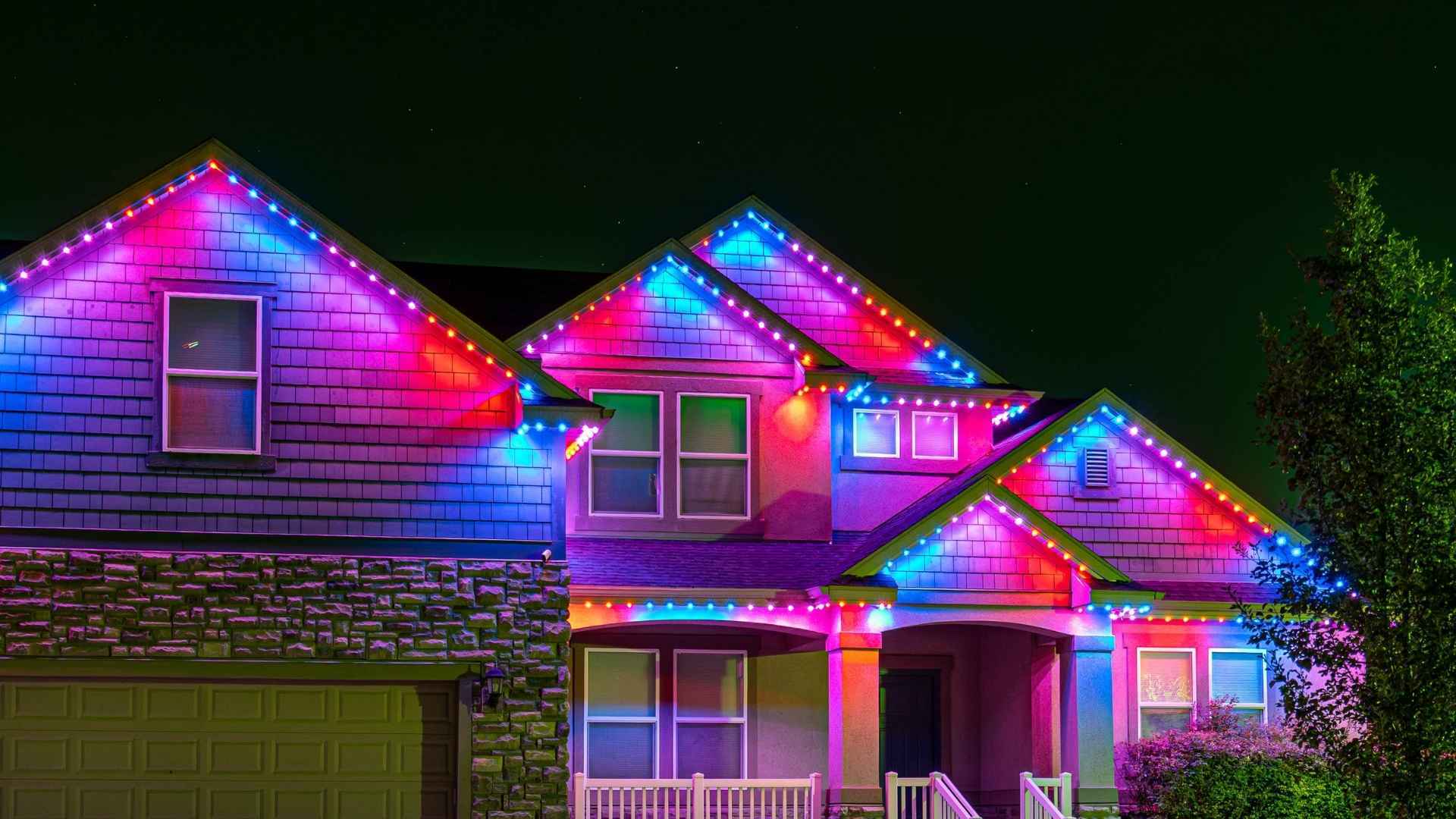
Most photos of permanent lighting show a tidy ranch house with one long, level eave. Plenty of homes look nothing like that. Maybe yours has a sharp...
4 min read
Trimlight : 10/29/26, 2:10 PM
Table of Contents
A squirrel or bird near your Trimlight installation does not mean the channel is damaged. If you notice a visible change in the channel, such as a loose section, shifted alignment, or new marks, photograph the concern from the ground and contact your authorized Trimlight dealer rather than opening or removing the channel yourself.
The useful question is what has changed at your roofline. A squirrel crossing the fascia or birds gathering nearby does not establish damage, and a dark section of lights does not identify its cause. Separate what you can see from what needs a professional assessment.
The Trimlight channel is the aluminum housing mounted along the eaves and fascia that holds the LED units in position. It forms part of the professionally installed roofline system, rather than a temporary strand attached for a season.
Trimlight's roofline installation process includes fitting and mounting the channel, positioning the LEDs, and integrating the wiring. Those components work together, so a concern about the channel should be assessed as part of the installation.
Seeing wildlife on your roof is not evidence of a problem with the channel. Focus on observable changes in the installation rather than drawing conclusions from an animal's presence.
Report visible changes in the channel or surrounding exterior, especially when they appear near a new lighting problem. You can give your dealer useful detail without deciding whether wildlife, weather, or exterior work caused the change.
If a section looks different from the adjacent run, note where the alignment changes. Photograph the area rather than pushing the channel back into position. A dealer needs to assess the mounting and surrounding material before deciding what requires attention.
Marks on the channel, a changed joint, or separation from the fascia are details worth documenting. Describe the appearance without labeling every mark as chewing. A close inspection may be needed to distinguish surface marks from damage that affects the installation.
No. The channel's visible condition and the lighting system's performance are separate observations. A dark section alone does not show that an animal damaged the housing, mounting, or wiring.
Tell your dealer whether you noticed a physical change, a lighting change, or both. If the app is accessible, note the selected setting in the Trimlight Edge app. Do not run tests on visibly damaged equipment just to produce a demonstration.
The Trimlight support resources provide controller-specific guidance for ordinary operating issues. They are not a substitute for inspection when a channel is loose or wiring is exposed.
A wide view and a closer zoomed view help establish where the channel concern sits on your home. Take both from stable ground without reaching toward the roofline.
Send the photos through your dealer's preferred contact method. A photograph helps communicate the concern, but it cannot confirm mounting integrity, electrical safety, or the repair needed.
Leave channel adjustment and removal to your authorized Trimlight dealer. Do not add fasteners, pry a section open, or move wiring to see what is behind the housing.
Tell your dealer whether the surrounding fascia also appears damaged. The lighting installation and the home's exterior may need different work, and the assessment should establish which needs attention before anything is reattached.
If you see exposed wiring or a component hanging loose, keep people and pets away and stop using the visibly damaged system. An app command does not establish electrical isolation. Do not approach damaged wiring to disconnect it; ask for qualified help. For smoke, sparks, or signs of fire, keep away and contact emergency services.
Your dealer should assess the channel condition and explain the proposed repair before work begins. Ask whether the concern involves the housing, mounting, surrounding fascia, wiring, or more than one component.
Coverage should be checked against the terms for your installed product and the assessed cause. The Trimlight warranty page lists product-specific coverage and exclusions. Its animal-interference exclusion appears under landscape lighting and should not be treated as a blanket answer for roofline channel repairs.
Keep the photos and service findings with your installation records. A clear record of what changed and what was repaired is more useful than assuming every roofline mark has the same cause.
No. Animal activity alone does not establish damage. Look from the ground for visible changes and report those to your authorized Trimlight dealer.
No. Photograph the section and contact your dealer rather than adjusting the mounting yourself. The surrounding fascia and installation need assessment before repair.
No. A dark section does not identify the cause of a lighting problem. Tell your dealer what changed and whether you can also see a physical change in the channel.
Yes, regardless of damage Trimlight offers a lifetime on all parts. Contact your dealer for more info.
Stay connected with Trimlight. Subscribe for monthly news, product updates, and outdoor lighting inspiration.
Most photos of permanent lighting show a tidy ranch house with one long, level eave. Plenty of homes look nothing like that. Maybe yours has a sharp...
Trimlight is known for innovative and high-quality Christmas house lighting. But what sets Trimlight apart from other exterior lighting solutions?...
Three numbers show up on almost every Trimlight quote: 6, 9, and 12 inches. They describe how far apart each diode sits inside the channel, and that...