1 min read
LED Patio Lights — Permanent Installation vs Temporary String Lights
A well-lit patio is one of those things that changes how a home feels more than its size or square footage would suggest. The right lighting...
6 min read
More than three out of four U.S. households put up outdoor Christmas lights every year, and for most of them the annual routine of hanging, taking down, and replacing worn-out strands feels like a fixed cost of the season rather than something worth adding up. It rarely gets treated as an actual expense line, but professional installation, replacement bulbs, and the time spent on a ladder twice a year all carry a real cost that repeats every December.
This page runs the actual math on what temporary holiday lighting costs over a decade compared to a one-time permanent LED lighting installation, and how Trimlight's app-controlled system pays that investment back well before most homeowners assume it would.
The sticker price of a box of lights is only the starting point. Once installation, removal, and the inevitable replacements are added in, the real annual cost of a seasonal display is considerably higher than most homeowners budget for.
National pricing data puts professional Christmas light installation at $220 to $680 per season, averaging around $430 to $450 for a standard display. Larger homes, multiple stories, or a full package that extends beyond the roofline to windows, shrubs, and driveways can push that well past $1,000, with some full installations running $750 to $5,000 depending on the home.
Most of that cost repeats every single year, since a seasonal installer has to remeasure, rehang, and remove the same display each time regardless of how much of it survived the previous season intact.
Doing the installation without a professional cuts the labor cost but doesn't eliminate the expense. Materials alone typically run $50 to $500 depending on the size of the display, and that figure climbs every year as strands get damaged in storage, bulbs burn out, or a section stops working partway through the season. Beyond the lights themselves, most DIY setups also need extension cords, mounting clips or hooks, and the occasional emergency trip to replace a strand that fails mid-December, none of which shows up in the original sticker price, and none of it accounts for the hours spent on a ladder each fall and again each winter.
Christmas lights face a problem patio or summer lighting doesn't: they're installed and running during the coldest, wettest stretch of the year. Repeated freeze-thaw cycles make plastic housings brittle, and a cord that flexed fine in October can crack after a hard freeze in December. Snow load and ice buildup on strands add weight that consumer-grade clips and hooks weren't built to hold for weeks at a time.
That seasonal timing means the wear happens exactly when the display needs to be reliable, and it's also when a repair means climbing a ladder in freezing temperatures instead of a mild fall afternoon.
The pattern tends to be the same for most homeowners. The first year, everything works and the display looks exactly like it did in the store. By year two or three, a section has gone dark, a few sockets look cracked or discolored, and a replacement strand gets added to the shopping list without much thought, and by year five or six that shopping list has repeated enough times that the household has a mismatched collection of strands from different years, patched together into a display that still works but doesn't look quite as clean as it did the first December. None of the individual purchases along the way ever felt significant, which is exactly why the total rarely gets added up until someone actually sits down and does the math.
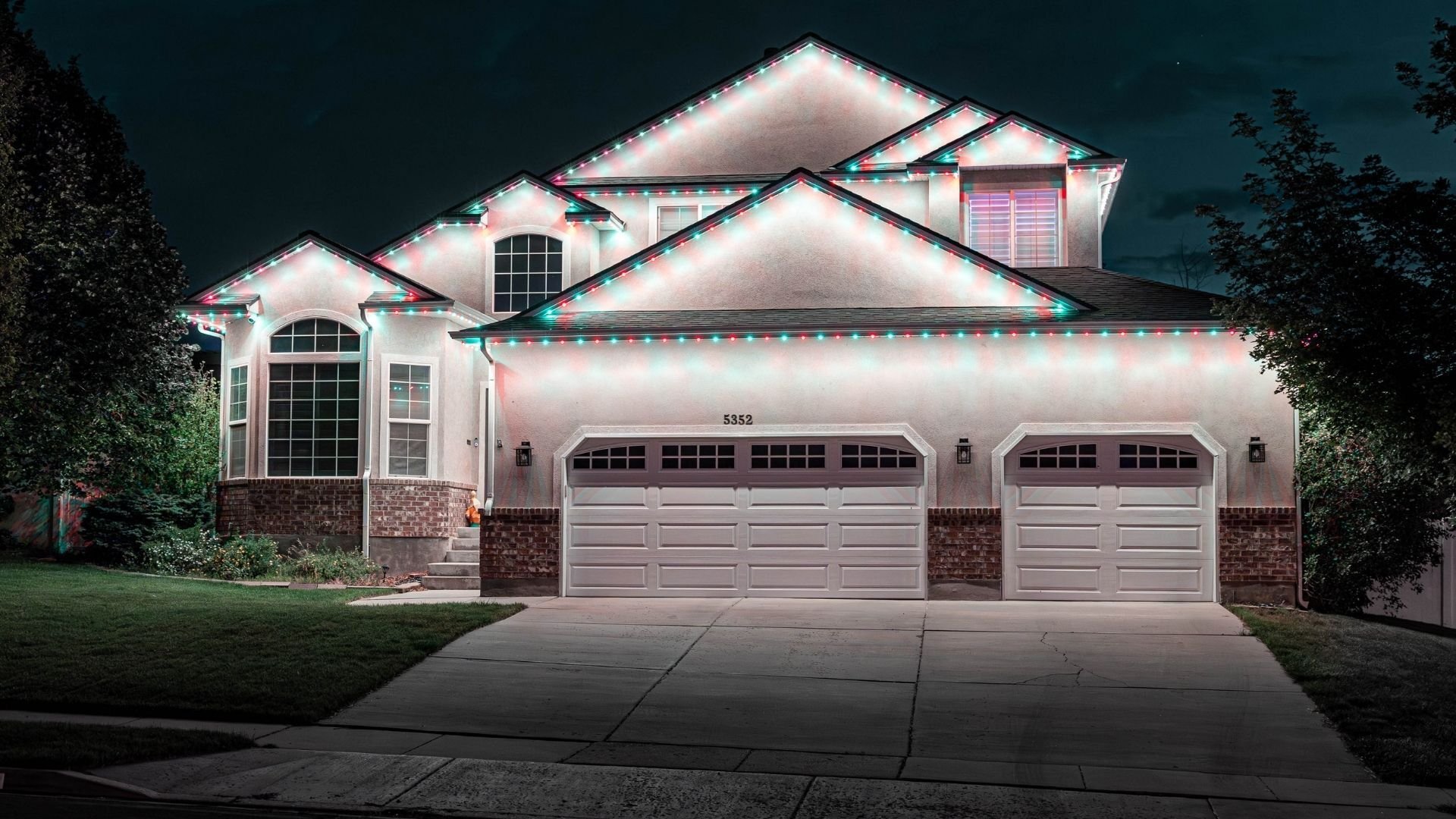
None of the dollar figures above account for the risk of putting the lights up in the first place, and that risk is larger than most homeowners expect.
The Consumer Product Safety Commission estimates close to 14,900 people were treated in emergency rooms for holiday decorating injuries in a recent season, and nearly half of those cases came from falling off a ladder or a roof.
Most of those falls happen during exactly the two tasks a temporary display requires every year: hanging the lights in the fall and taking them down again in the new year. Neither task gets easier or safer with repetition, since the risk comes from the ladder work itself, not from inexperience that fades over time.
A permanent system is installed once by a factory-trained technician, so a homeowner is never the one on the ladder in the first place. The installation happens a single time, on the ground and on a schedule the homeowner sets in advance, and every season after that, the only thing that changes is the color or pattern on a phone screen, with no annual return trip up a ladder to hang anything, take anything down, or troubleshoot a dark section before guests arrive.
Once the annual cost of temporary lighting is established, the decade-long comparison against a one-time permanent installation is easy to lay out side by side.
At an average of $430 to $450 a season, hiring a professional installer every year for ten years adds up to roughly $4,300 to $4,500, and that's a conservative estimate.
It doesn't account for labor rates rising over a decade, a homeowner expanding the display, or the multi-story and larger-home packages that run $750 to $5,000 per season and would put the ten-year total several times higher.
Most residential Trimlight installations run $2,000 to $6,000 or more upfront depending on the size of the home, at a rate of $18 to $35 per linear foot that covers the complete installed system, hardware, professional installation, and setup, with no separate labor line item added on top. That's a single investment covered by a lifetime product warranty rather than a recurring seasonal bill, and most homeowners recover that upfront cost within three to five years of what they would have otherwise paid an installer season after season. Everything after that point is essentially free by comparison to what a temporary display would have cost to keep hiring out.
What that investment buys is also built differently from a consumer strand. Trimlight's bulbs sit in a patented, low-profile channel that keeps the wiring concealed and the bulbs themselves rated IP68 for continuous outdoor exposure, including the freeze-thaw cycles and moisture that crack consumer sockets. A factory-trained, authorized dealer completes the entire installation in a single day, so there's no season of DIY trial and error before the system is fully operational.
To make the range concrete, a front-only installation covering the visible roofline of a typical single-story home usually runs 80 to 150 linear feet, which lands between roughly $1,440 and $5,250 at Trimlight's per-foot rate before any local market adjustment. A full perimeter installation that wraps all four sides of the home typically involves two to three times that footage, which is what pushes larger or multi-story projects toward the upper end of the $2,000 to $6,000-plus range.
The one ongoing expense a permanent system does have is electricity, and the actual number is small. A typical permanent lighting setup draws somewhere in the range of 100 to 300 watts when fully lit, which works out to roughly $5 to $15 for an entire holiday season running six hours a night, based on current national average electricity rates.
The ten-year math already favors a permanent system, but the comparison undersells it, since a temporary display only earns its cost back during the weeks it's actually up each year.
Trimlight's app lets homeowners change color and pattern for any occasion instead of just one, so the same installation that handles a holiday display can switch to team colors on game day, a different scheme for Halloween, or a simple white glow for everyday use, all from the same hardware. A seasonal Christmas light rental or purchase, by comparison, is built for exactly one occasion and sits in a box the other eleven months of the year.
Between seasons, temporary lights have to be coiled, boxed, and stored somewhere that doesn't crush the bulbs or trap moisture against the wiring, and every source of damage in storage becomes next year's replacement cost.
A permanent system skips that step entirely, since the hardware stays exactly where it was installed and the display changes through the app instead of through new physical lights pulled out of a bin every November.
National data puts the average around $430 to $450 per season, with a typical range of $220 to $680 depending on home size and display complexity. Larger or multi-story homes commonly run higher.
Most homeowners recover the upfront cost within three to five years, based on what they'd have otherwise spent hiring a professional installer season after season.
No. The same installation adjusts for any color, pattern, or occasion through the app, including Halloween, game days, and everyday use, so the investment isn't limited to one holiday each year.
A full perimeter installation typically involves two to three times the linear footage of a front-only installation, with cost increasing proportionally. A local dealer can provide exact measurements and pricing for both during a consultation.
Based on typical permanent lighting power draw (100 to 300 watts) and current national average electricity rates, running the system six hours a night for a full holiday season costs somewhere around $5 to $15 total, not per month, for the whole season.
1 min read
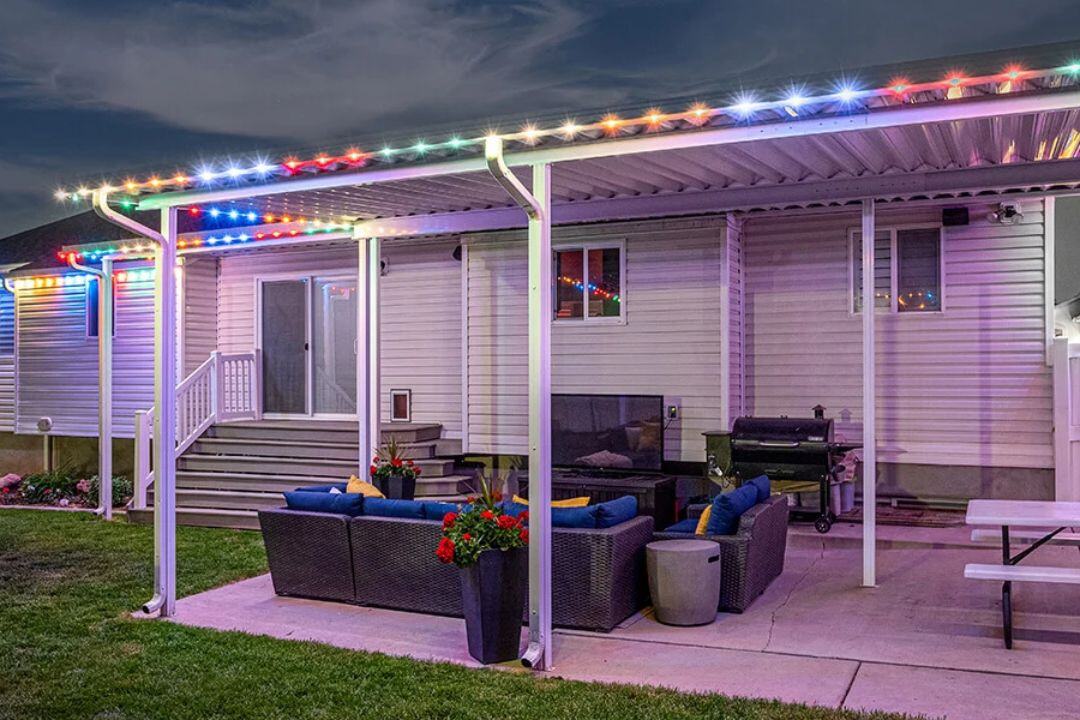
A well-lit patio is one of those things that changes how a home feels more than its size or square footage would suggest. The right lighting...
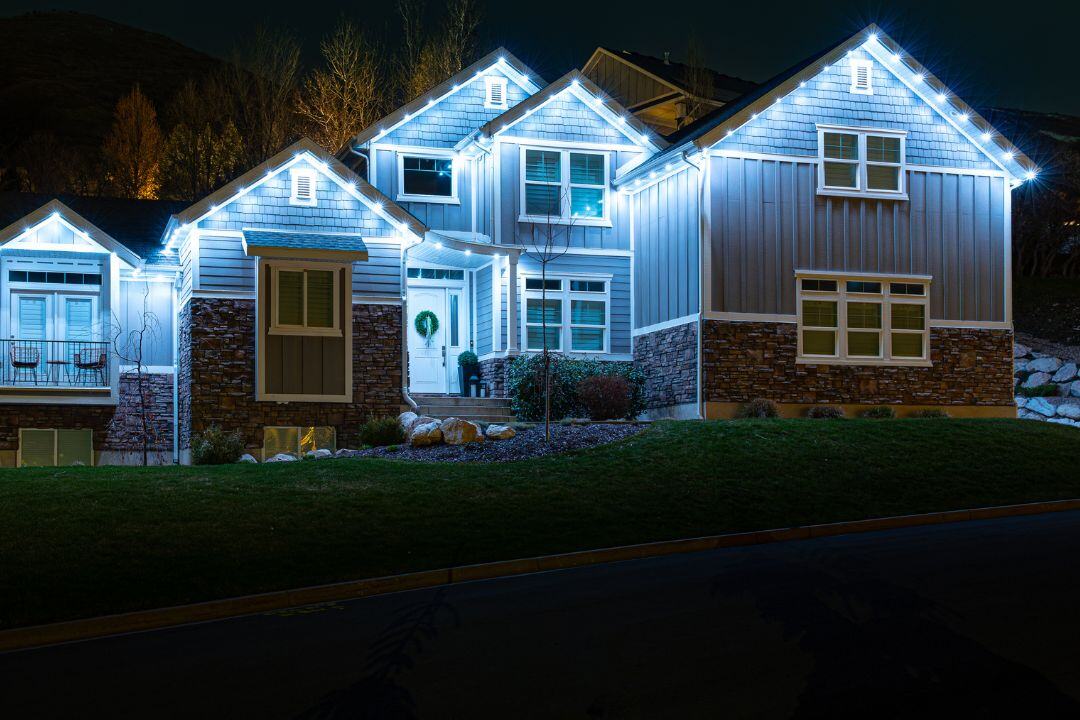
Trimlight has taken the world of outdoor LED lighting by storm with our revolutionary solutions. Whether you are a homeowner, business owner, or part...
1 min read
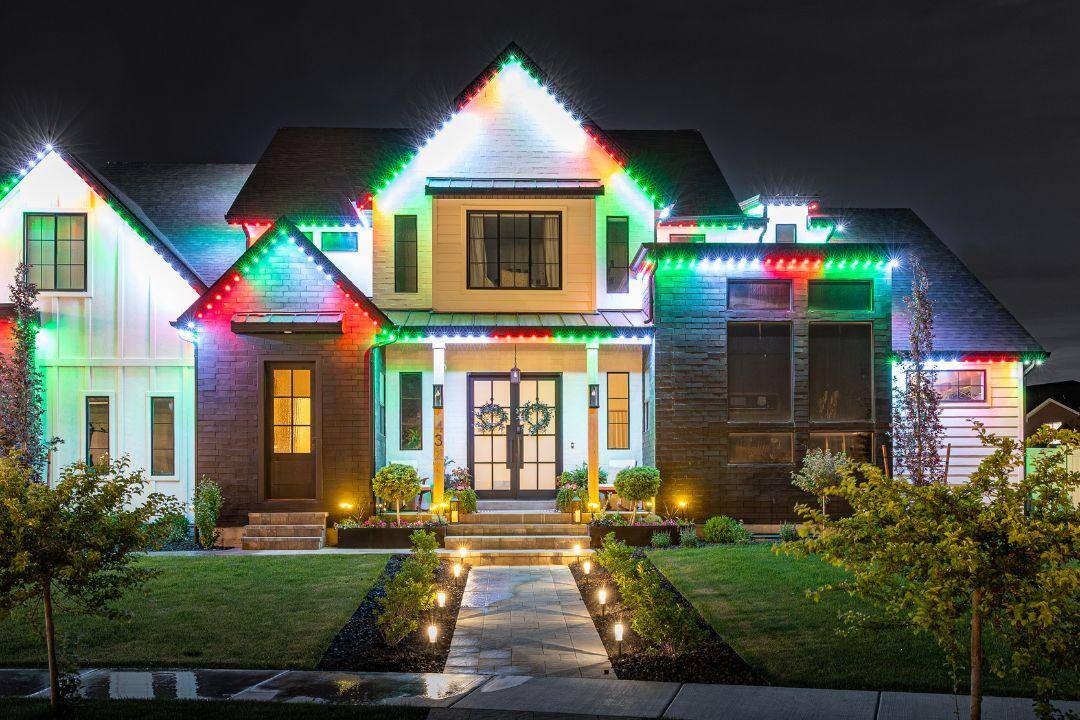
Temporary lights have been the default for decades, and for most homeowners, the routine is the same every year. A few weekends of setup, a few weeks...