Permanent vs. Temporary Christmas Lights: The Real 10-Year Math
More than three out of four U.S. households put up outdoor Christmas lights every year, and for most of them the annual routine of hanging, taking...
9 min read
A well-lit patio is one of those things that changes how a home feels more than its size or square footage would suggest. The right lighting transforms an outdoor space from somewhere people drift in and out of before dinner into a place the evening actually centers around — somewhere that feels finished and intentional well after the sun goes down. Most homeowners get there with string lights. They work, they look warm and inviting, and they are easy to find at any hardware store. The problem is not that they stop looking good. The problem is that they stop working.
Temporary patio string lights have a ceiling. They sag, they burn out section by section, they tangle every time you try to adjust them, and eventually the sockets corrode or a connection fails and the whole strand goes dark. The experience of living with them over a few seasons is almost always the same: a great first summer, a frustrating second one, and a slow accumulation of replacements and workarounds that makes the whole setup feel more like a maintenance project than an amenity. Permanent LED patio lighting exists to solve that problem at the root rather than one burned-out bulb at a time.
Get a Free Quote for Permanent LED Accent Lighting!

Outdoor living spaces represent a significant investment for most homeowners, the furniture, the hardscaping, the built-in grill, the pergola or covered structure that pulls it all together. What is easy to underestimate is how much of that investment goes unused after dark when the lighting is inadequate. A patio with no overhead lighting or unreliable string lights effectively closes for the evening the moment the natural light fades, regardless of how much was spent building it out during the day.
Good patio LED lighting changes that dynamic entirely. It keeps the space functional and inviting well into the evening, it creates the atmosphere that makes people want to stay outside rather than moving indoors, and it makes the outdoor area feel like a genuine extension of the home rather than a seasonal feature that only earns its keep on bright summer afternoons. The difference between a patio that gets used every evening and one that gets abandoned at dusk is almost always the quality and reliability of the lighting overhead.
Temporary string lights are the default patio lighting solution for most homeowners because they are inexpensive, widely available, and immediately effective. Strung across a pergola or draped along an eave, they produce a warm, ambient glow that photographs well and feels genuinely inviting. The issue is not the look — it is the lifespan, and the reality of what maintaining them actually involves once the novelty of the first season wears off.
Outdoor string lights are manufactured for the consumer market, which means they are priced and built accordingly. The sockets are typically plastic, the wiring is lightweight, and the bulbs even LED ones are not designed for the kind of continuous outdoor exposure that a year-round patio fixture experiences. UV degradation yellows the casings. Heat cycles crack the sockets. Moisture finds its way into connections that were not designed to keep it out indefinitely. Within two or three seasons, most consumer-grade patio string lights are showing visible deterioration: browning sockets, flickering sections, strands that only partially illuminate regardless of how many bulbs you replace.
The sagging is its own separate issue. String lights stretched between anchor points rely on the structural integrity of the cord itself to maintain their shape, and that integrity diminishes with heat, weight, and time. What looked perfectly spaced in the first month gradually droops into uneven arcs that no amount of retensioning fully corrects. The look that felt curated in the first season starts to feel improvised by the third.
With temporary patio string lights, there is always something to address. A section goes dark and you trace it back to a failed socket. The whole strand dims and you wonder whether it is the connection or the power supply. A storm comes through and three bulbs are broken and two sockets are cracked. You replace what you can find, discover the replacement bulbs are a slightly different shade of warm white than the originals, and live with the mismatch or replace the whole strand. For something that was supposed to be a simple, low-effort way to light a patio, the ongoing management accumulates into a disproportionate amount of time and money over the course of a few years.
The frustrating part is that none of these individual problems is large enough to feel like a clear reason to do something different. A failed bulb is a five-dollar fix. A sagging section gets retensioned and holds for another month. A darkened socket gets bypassed with a replacement strand. Each repair is manageable in isolation, which is why most homeowners keep managing them rather than stepping back to see what the total cost of all those small fixes actually adds up to over three or four seasons of use.
Traditional patio string lights come in one setting: on or off. The warmth, the brightness, and the color are fixed at purchase and cannot be adjusted without buying different strands. If you want a dimmer glow for a quiet evening versus a brighter setup for a gathering, or if you want to shift the color for a holiday or occasion, the only option is to physically swap out hardware. For a lighting solution that is supposed to make a space more enjoyable and flexible, the lack of any real control over the output is a significant limitation that becomes more apparent the longer you have the lights.
This matters most when the patio is being used for different purposes on different evenings a relaxed dinner with family one night, a larger outdoor gathering the next, a holiday display for the kids the weekend after. String lights handle all of those occasions the same way because they have no mechanism to do anything else. Permanent LED lighting with full app control handles each of them differently, on demand, without any physical changes to the setup.
Permanent LED patio lighting starts from a completely different premise than consumer string lights. Rather than a product you buy off a shelf and hang up yourself, it is a professionally installed system that is engineered for the specific structure it is attached to and built to perform reliably for years without the cycle of degradation and replacement that temporary lighting involves.
Where string lights hang from hooks or clips and are supported by their own cord tension, permanent LED patio lighting is mounted directly into the structure of the covered area — along the eaves of a pergola, under the fascia of a covered patio roof, or along the overhead beams of an outdoor living space. The mounting is clean, the wiring is concealed, and the fixture becomes part of the architecture rather than something draped over it. The result looks like the lighting was always there because it was designed to be there — which produces a fundamentally different aesthetic than any temporary string installation, regardless of how carefully the strings are hung.
The LEDs themselves are individually addressable RGB units rated for 50,000 hours of use, built into a weatherproofed channel that handles continuous outdoor exposure without the degradation that consumer-grade products experience. There is no yellowing, no cracking sockets, no corroding connections — the system is designed from the start for the environment it lives in, not adapted to it after the fact.
Permanent LED patio lighting connected to the Trimlight Edge app gives homeowners something temporary string lights never can: complete control over the atmosphere of the space on demand. Brightness is fully adjustable, so the same lighting that creates a soft ambient glow for a quiet weeknight dinner can be dialed up for a crowded outdoor gathering. Color is fully adjustable, so the warm white that works for every ordinary evening can shift to vivid holiday colors, team colors for a game day, or any custom scheme for a specific occasion. Patterns and animations are available for moments that call for something more expressive.
The scheduling tools take this a step further by automating the whole thing. Set the lights to come on at a specific time every evening, shift to a holiday pattern on designated dates, and return to the everyday default automatically — without the homeowner needing to touch anything. The patio lights become something the space simply has, reliably and consistently, rather than something that requires active management to keep working and looking right.
Temporary patio string lights are a summer product in practice, even when marketed as outdoor fixtures. Most homeowners take them down before winter, store them in conditions that accelerate degradation, and reinstall them in the spring to discover how much the off-season affected them. Permanent LED patio lighting requires none of that management. Rain, cold, heat, and humidity are all accounted for in the engineering, and the system performs identically in February as it does in July. For homeowners with covered outdoor spaces that are genuinely usable in cooler months, that consistency is a meaningful part of what makes the investment worthwhile.
There is also a subtler benefit that most homeowners only notice after the first full year with a permanent system: the patio stops feeling like a seasonal space. When the lighting is always on and always reliable, the covered patio gets used on evenings in October and March that would have been too dark or too uncertain with temporary lights. The outdoor space earns its value across more of the calendar, which changes how the household actually uses the home over the course of a year.
For most homeowners, the choice between permanent and temporary patio lighting comes down to two things: how long they plan to stay in the home and how seriously they use the outdoor space. The math on a permanent installation looks straightforward once those two variables are honest.
Consumer patio string lights look inexpensive at the point of purchase, but the real cost is what accumulates over multiple replacement cycles. A quality set of outdoor string lights for a standard-sized covered patio runs anywhere from fifty to two hundred dollars. Replace them every two to three years — which is realistic given typical outdoor degradation — and the cost over a decade becomes meaningful. Add the replacement bulbs, the additional strands purchased when sections fail, and the time spent managing all of it, and the gap between temporary and permanent narrows considerably before the quality and control differences are even factored in.
Most homeowners never do this calculation because each individual purchase feels small relative to the overall cost of the patio. But the replacement strand bought in year two, the new set purchased in year four when the sockets started failing, and the partial replacement in year six add up in a way that becomes visible only when you look at the full picture. A permanent system replaces all of that with a single upfront investment and no recurring hardware costs for the life of the installation.
The more relevant calculation for most homeowners is not the cost of the lights themselves but the cost of an outdoor living space that does not get used to its potential because the lighting is unreliable or inadequate. A patio that cost tens of thousands of dollars to design and build earns its value through regular use — family dinners, gatherings, quiet evenings outside. Every night the lighting fails or the atmosphere feels off is a night the investment in the space is not paying off. Permanent LED lighting that works reliably and creates exactly the right atmosphere on demand is, from this angle, as much a functional upgrade to the outdoor living space as a lighting one.
Homeowners who make the switch consistently report that their covered patio gets used more after the permanent system is installed than it did before — not because the space itself changed, but because the lighting makes it worth being in on evenings when string lights would have made the choice uncertain. That increased usage is the real return on the investment, and it compounds across every season the system is running.
Trimlight is primarily known as a roofline lighting system, but the same permanent LED technology that traces the architectural outline of a home extends naturally to covered patios, pergolas, and outdoor structures. The installation along a covered patio eave or pergola beam uses the same professionally mounted LED channel, connects to the same control box, and is managed through the same Trimlight Edge app as the roofline system. For homeowners who have Trimlight on the roofline already, adding patio coverage means the two systems work as one — the same color, the same pattern, the same schedule, all coordinated from a single app without any additional management.
For homeowners starting with the patio, the installation works as a standalone system that can be expanded to the roofline later. Either way, the hardware that goes in is the same quality, the same weatherproofing, and the same 50,000-hour LED lifespan not a consumer product adapted to an outdoor environment, but a purpose-built permanent system designed to be there from day one.
If the patio gets used regularly and the expectation is that it will continue to, the answer for most homeowners is yes. The quality of the lighting is better, the reliability is dramatically higher, the ongoing management is essentially zero, and the control over color and atmosphere is in a different category entirely from anything temporary string lights can offer. The upfront investment is higher than a set of consumer strands, but it is a one-time investment in a system built to last, not the beginning of a recurring replacement cycle that compounds in cost and frustration over time.
The homeowners who tend to find the clearest value are those who entertain outdoors regularly, those who want their patio to function as an extension of the home on ordinary evenings rather than only on special occasions, and those who have had enough experience with temporary string lights to know exactly what replacing them for the third time feels like. For those homeowners, the decision tends to feel less like an upgrade and more like a problem that finally has a permanent solution.
Yes, Trimlight installs along the eaves or overhead structure of covered patios, pergolas, and outdoor living areas using the same permanent LED channel as the roofline system.
Yes — if both are part of the same Trimlight installation, they connect to the same control box and are managed through a single Trimlight Edge app, so color changes, patterns, and schedules apply to both areas simultaneously.
Yes — Trimlight is engineered for continuous outdoor exposure and performs reliably through cold temperatures, rain, and humidity year-round without requiring removal or seasonal protection.
A local authorized Trimlight dealer visits your home, assesses your patio structure, and handles the complete installation in a single day — the system is fully operational the same evening the crew finishes.
Trimlight is professionally installed into the structure of the patio, uses commercial-grade LEDs rated for 50,000 hours, and offers full color and brightness control through an app — string lights are a consumer product that degrades with outdoor exposure, offers no control over color or brightness, and requires ongoing replacement every few seasons.
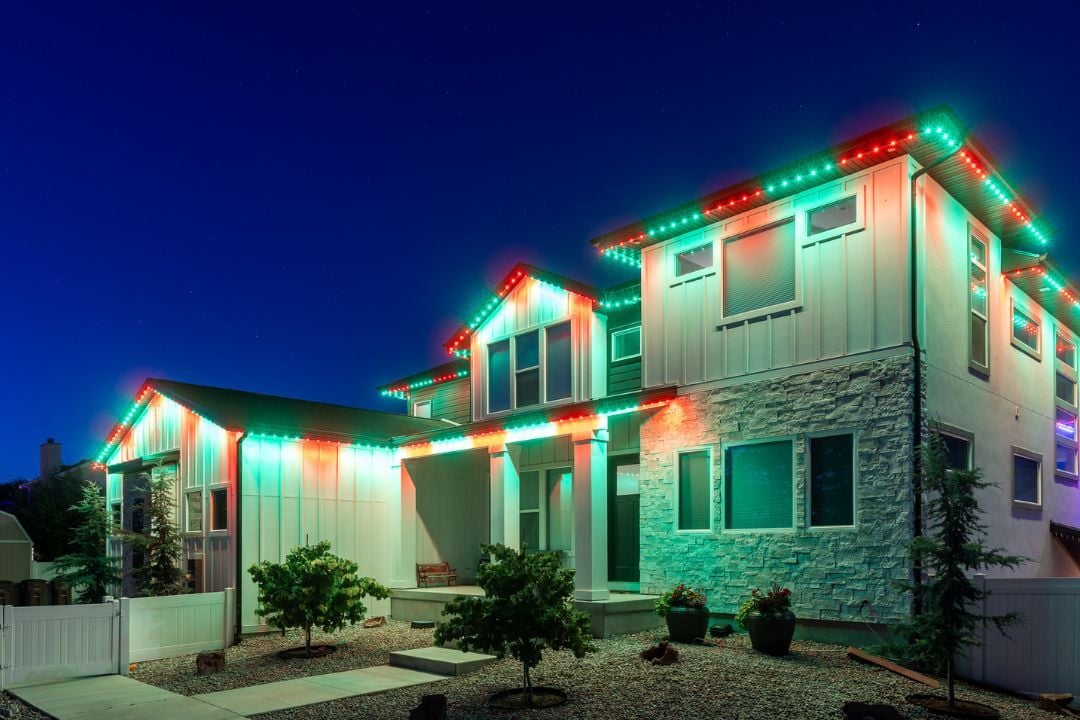
More than three out of four U.S. households put up outdoor Christmas lights every year, and for most of them the annual routine of hanging, taking...
1 min read
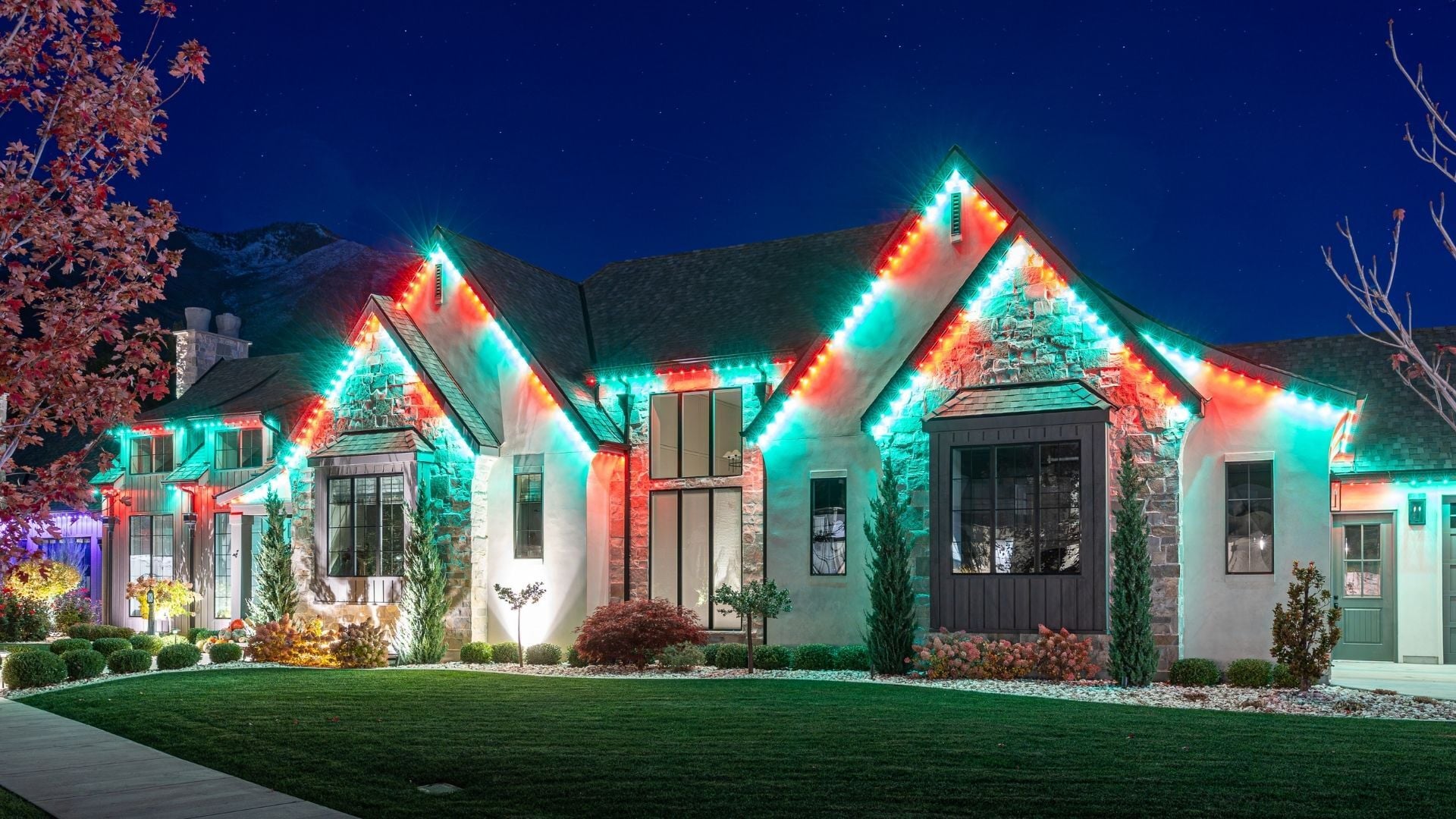
The best permanent Christmas lights in 2026 depend on what you're optimizing for. A professionally installed architectural system and a DIY kit solve...
1 min read
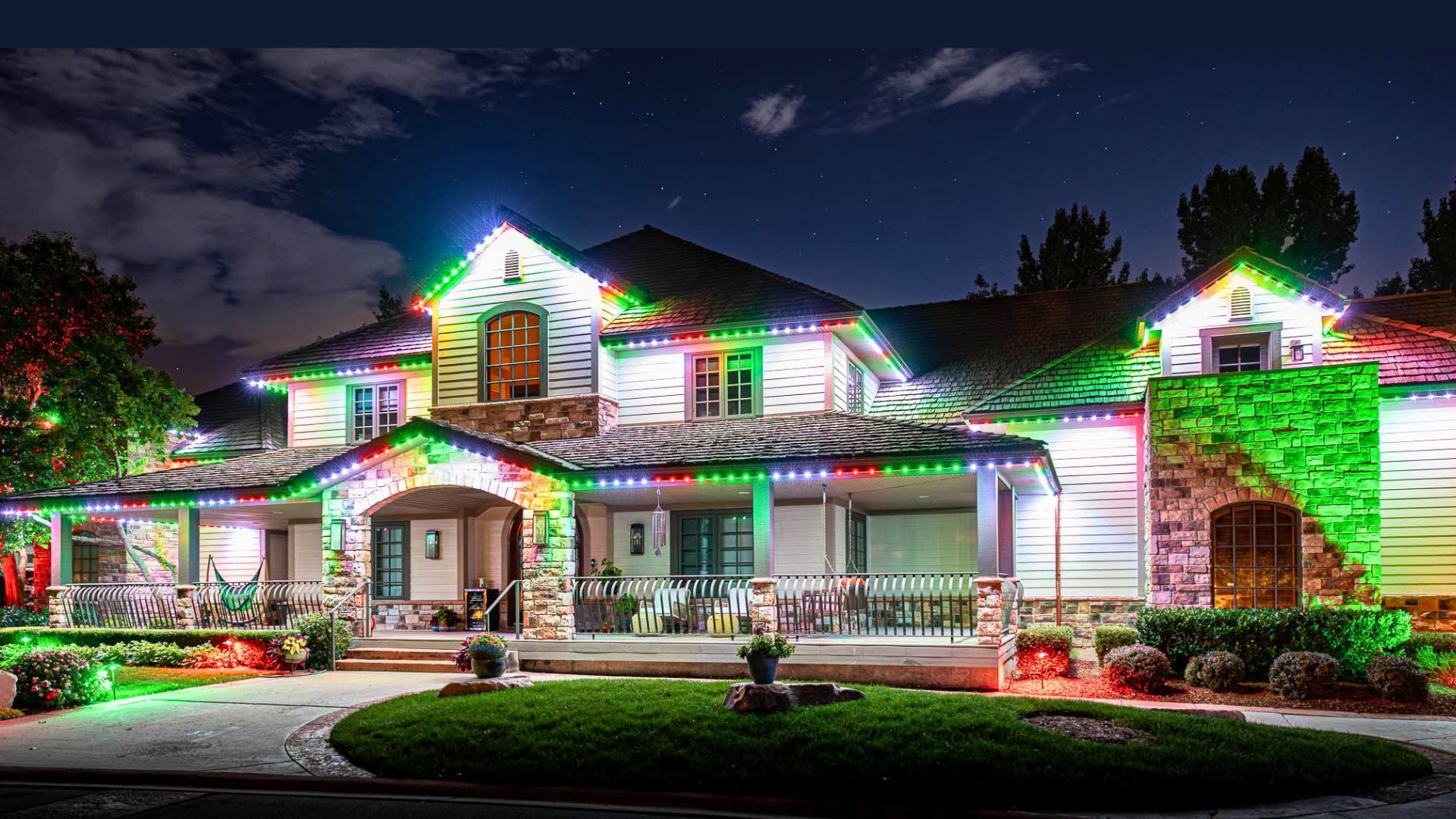
Every fall, homeowners start searching for the same answer: how many strands of Christmas lights does my house actually need? That math works fine...