1 min read
Outdoor Downlighting For Homes — A Complete Guide
Outdoor downlighting is one of those exterior features that is easy to overlook until you see it done well — at which point it is difficult to...
9 min read
The right outdoor accent lighting does something most exterior upgrades cannot: it changes how your home looks every single evening, not just during the day. A well-lit exterior after dark reads as deliberate, finished, and cared for in a way that landscaping, paint, and other daytime improvements simply cannot replicate once the sun goes down. Yet for most homeowners, exterior accent lighting is still an afterthought, something addressed seasonally if at all, with temporary solutions that were never designed to carry the visual weight of a home's after-dark presentation.
That gap between what exterior accent lighting can do and what most homeowners currently have it doing is exactly where the most meaningful improvements are available. Whether you are starting from scratch or reconsidering an approach that has never quite worked the way you wanted it to, this guide covers the full range of outdoor accent lighting ideas and lays out the honest differences between permanent LED systems and the traditional options most homeowners default to.
Get a Free Quote for Permanent LED Accent Lighting!

Outdoor accent lighting serves a specific visual function: it draws attention to the features of a home’s exterior that define its character and shape. The roofline, the entry, the architectural details, the landscaping, the outdoor living spaces — these elements exist during the day and after dark, but most of them disappear into darkness the moment the sun sets unless a deliberate lighting decision has been made to keep them visible and legible. Good accent lighting does not just illuminate the exterior; it curates it, directing the eye toward the features worth seeing and creating a cohesive visual impression from the street.
This is the distinction that separates exterior accent lighting from functional outdoor lighting like floodlights or motion sensors. Functional lighting exists to serve a security or safety purpose. Accent lighting exists to serve an aesthetic purpose: making the home look the way the homeowner intends it to look after dark, to everyone who encounters it. The two are not mutually exclusive, and the best exterior lighting setups address both, but they start from different objectives and deliver different results.
Not every area of a home’s exterior benefits equally from accent lighting. Some locations deliver outsized visual returns, others are supporting details that contribute to the overall composition without defining it. Understanding which is which helps homeowners prioritize where to invest first and how to build out a complete exterior lighting picture over time.
Roofline lighting is the single highest-impact placement for exterior accent lighting on most homes. The roofline defines the architectural silhouette of the house, the shape that registers from a distance, the outline that distinguishes one home from another on a street full of them, and the feature that a well-lit exterior traces most visibly after dark. Lighting installed along the eaves, gables, and fascia gives the home a presence and definition at night that nothing else on the exterior can replicate at the same scale.
This is where permanent LED systems like Trimlight have the clearest advantage. Because the lights are installed directly into a channel along the fascia, the roofline illumination is even, precise, and architectural rather than improvised. The home looks like it was designed with nighttime visibility in mind, which produces a meaningfully different impression than clip-on seasonal lighting or externally mounted strips that are visible as add-ons rather than integrated features.
The entry is where a home makes its most direct statement to anyone arriving at it. Well-placed accent lighting around the front door, whether from overhead fixtures, flanking wall sconces, or integrated architectural lighting, signals welcome and intentionality simultaneously. It is also one of the most functional accent lighting placements, since an entry that is clearly visible and well-lit after dark is simply easier and safer to navigate than one that is not.
Landscape accent lighting works differently than roofline or entry lighting. It operates at ground level and draws attention upward into trees, shrubs, garden beds, and other plantings rather than across the horizontal plane of the home. Uplighting a mature tree, washing a hedge with soft ground-level illumination, or marking the edges of a garden bed with low-profile fixtures each contribute to a layered exterior lighting composition that reads as considered and complete from the street.
These placements tend to work best as supporting elements rather than the primary statement, filling in the areas around the home’s main architectural lighting and creating depth in the overall exterior picture. A roofline that is beautifully lit but surrounded by total darkness reads as isolated. The same roofline with some ground-level landscape lighting around it reads as the centerpiece of a cohesive exterior design.
Accent lighting in outdoor living spaces serves a dual purpose: it makes the space more usable and more visually appealing at the same time. A covered patio or pergola with consistent overhead lighting becomes a functional extension of the home’s interior well into the evening, rather than a space that gets abandoned when the daylight fades. String lights, overhead fixtures, and permanent LED systems installed along the eaves of a covered structure each address this need differently, with permanent solutions offering the most consistent and controllable result over time.
Pathway lighting is often the most practically motivated accent lighting decision a homeowner makes. It exists primarily to make the approach to the home safe and navigable after dark. Done well, it also contributes meaningfully to the exterior’s visual composition, marking the edges of the approach and drawing the eye toward the entry. Low-profile bollard fixtures, in-ground step lights, and solar-powered path markers each address this need with varying degrees of permanence and visual polish.
The comparison between permanent LED systems and traditional exterior accent lighting approaches is not purely about aesthetics. It is about what each option is designed to do, how long it is built to do it, and what the homeowner has to manage to keep it working. Most traditional approaches solve a narrow problem adequately. Permanent LED systems solve a broader problem at a higher level, and the differences become most apparent when you look at them side by side across the categories that matter most to homeowners.
Traditional exterior accent lighting, whether hardwired fixtures, low-voltage landscape systems, or seasonal string lights, is static once it is installed. The color is what it is, the position is where it is, and changing either typically means buying new hardware. Permanent LED systems built on RGB technology work from an entirely different premise. Every color in the visible spectrum is available through the app, patterns and animations can be changed in seconds, brightness is adjustable on demand, and automated schedules can shift the display through the calendar without the homeowner needing to take any action. The flexibility gap between a static hardwired fixture and an app-controlled permanent LED system is substantial, and it compounds over time as homeowners discover how many more occasions and uses the flexible system can serve.
Traditional low-voltage landscape systems and hardwired exterior fixtures require professional installation and are designed to stay in one configuration indefinitely. Moving or expanding them involves additional electrical work. Seasonal options like string lights or clip-on holiday strands are easier to change but require ongoing physical management: installation, removal, and storage each season. Permanent LED roofline systems like Trimlight fall into a distinct third category: professionally installed once, then fully flexible in terms of what they display without any physical reconfiguration required. The hardware commitment is permanent; the visual output is not.
Solar pathway lights need their panels cleaned and their batteries replaced on a recurring cycle. String lights and seasonal strands degrade with repeated handling, storage, and exposure, and failed sections need to be identified and replaced. Hardwired fixtures with incandescent or halogen bulbs require periodic bulb replacement. Permanent LED systems with a rated lifespan of 50,000 hours require significantly less ongoing maintenance than any of these alternatives, and because the hardware is not handled or stored seasonally, they avoid the mechanical wear that shortens the effective life of temporary lighting approaches.
This is where the differences between lighting approaches are most immediately visible, and where the gap between a well-executed permanent LED installation and most traditional alternatives is most pronounced. A roofline traced evenly with individually addressable LEDs produces a quality of illumination that clip-on seasonal lights, externally mounted strip products, and most traditional fixture-based approaches simply cannot match. The evenness of the coverage, the precision of the placement, and the quality of the light output all contribute to an after-dark impression that reads as architectural and intentional rather than decorated or improvised.
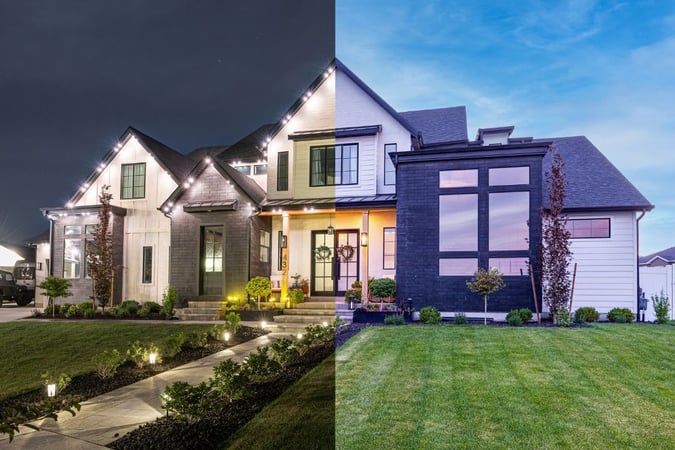
For homeowners in the early stages of thinking through an exterior lighting plan, here are some of the most impactful ideas to consider, ranging from simple starting points to more comprehensive approaches.
If you are making one exterior lighting investment, make it the roofline. No other single placement has as much impact on how the home reads after dark from the street, and no other placement is as visible on a consistent nightly basis. A clean, even roofline installation sets the visual foundation for every other accent lighting decision you make afterward, and it tends to make the rest of the exterior look more cohesive and intentional as a result. With a permanent LED system, this investment also scales with you: as your preferences and occasions change the display changes with them without requiring any new hardware.
Once the roofline is addressed, the next most impactful addition is typically some form of ground-level landscape lighting around the perimeter of the home. This does not need to be complex. Even a simple set of low-voltage fixtures washing the foundation plantings or uplighting a few key landscape elements creates the layered effect that makes an exterior feel complete rather than partially lit. The goal is to eliminate the hard line between the illuminated roofline above and complete darkness below, giving the eye a continuous path through the exterior composition rather than an abrupt visual drop-off.
Dedicated accent lighting at the entry, whether wall-mounted sconces, an overhead pendant, or integrated architectural lighting above the door, gives the home a focal point that draws attention to its most important exterior feature. This is especially effective when the entry lighting is warm in tone and slightly more intense than the surrounding accent lighting, creating a natural hierarchy that guides the eye to the front door first and lets the roofline and landscape lighting provide the supporting visual context around it.
Homeowners who invest in patios, decks, and outdoor kitchens often underlight these spaces relative to what they spent building them. A covered patio with no overhead lighting after dark becomes unusable the moment the sun goes down, which means the investment in the space stops paying off at exactly the point in the evening when most people most want to be outside. Permanent LED lighting along the eaves of a covered outdoor structure, or string lights across an open pergola, transforms that dynamic entirely, the space becomes a functional part of the evening rather than something the household retreats from.
One of the most underutilized opportunities in exterior accent lighting is color, specifically the ability to use it deliberately for specific occasions rather than defaulting to white for everything all the time. A roofline that can shift from architectural warm white on ordinary evenings to vivid seasonal colors for Halloween, the 4th of July, or game days is doing something no static fixture can do, and it turns the exterior lighting from a single-purpose feature into a flexible tool that serves the home differently depending on what is happening inside and outside it.
Trimlight is specifically designed to address the roofline component of an exterior accent lighting plan, the highest-impact, executed at a level of quality and flexibility that traditional roofline lighting options cannot match. The system is professionally installed once into a custom-fit channel along the fascia, and from that point forward every aspect of the display is controlled through the Trimlight Edge app: colors, patterns, brightness, scheduling, and seasonal transitions. The LEDs are individually addressable and rated for 50,000 hours, and the installation is designed to be invisible from the street during the day so the exterior looks clean and architectural at all times, not just when the lights are on.
For homeowners building out a complete exterior lighting plan, Trimlight typically functions as the primary statement, the roofline installation that defines the after-dark character of the home, with traditional low-voltage landscape fixtures, pathway lighting, and entry fixtures filling the supporting roles in the broader composition. The two categories work together rather than in competition, and the result is a layered exterior that holds up visually from the street on any given night, regardless of the season or occasion.
While rooflines are the primary application, the system can also be installed along the eaves of covered patios, pergolas, and outdoor structures, with the Trimlight Edge app controlling all areas together as one coordinated installation.
Yes, the channel is custom-cut to the specific dimensions of each home, so it works across a wide range of architectural styles, roofline profiles, and trim types, and your local dealer will confirm the best approach during the consultation.
Architectural lighting is exterior lighting that is integrated into the structure of the home itself rather than added to it, tracing the roofline, fascia, and key structural features to make the home’s shape and character visible after dark in a way that looks intentional rather than decorated.
Facade lighting refers to illumination that highlights the front face of a home’s exterior, typically along the roofline, architectural details, and entryway, creating a defined visual impression from the street that persists every evening regardless of the season.
The roofline delivers the broadest and most immediate visual impact, followed by the entryway, landscape and garden areas, and covered outdoor living spaces. Each adds a layer to the overall exterior composition after dark.
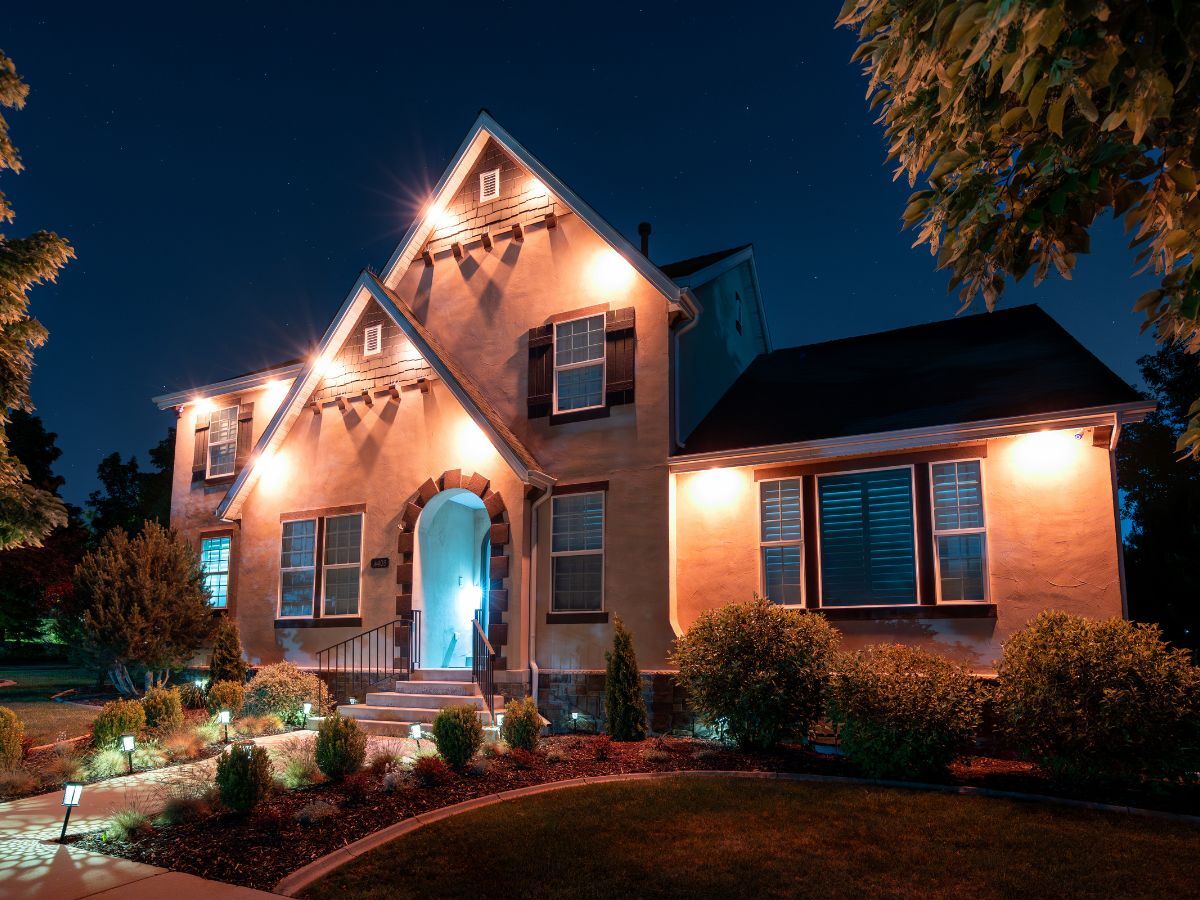
1 min read
Outdoor downlighting is one of those exterior features that is easy to overlook until you see it done well — at which point it is difficult to...
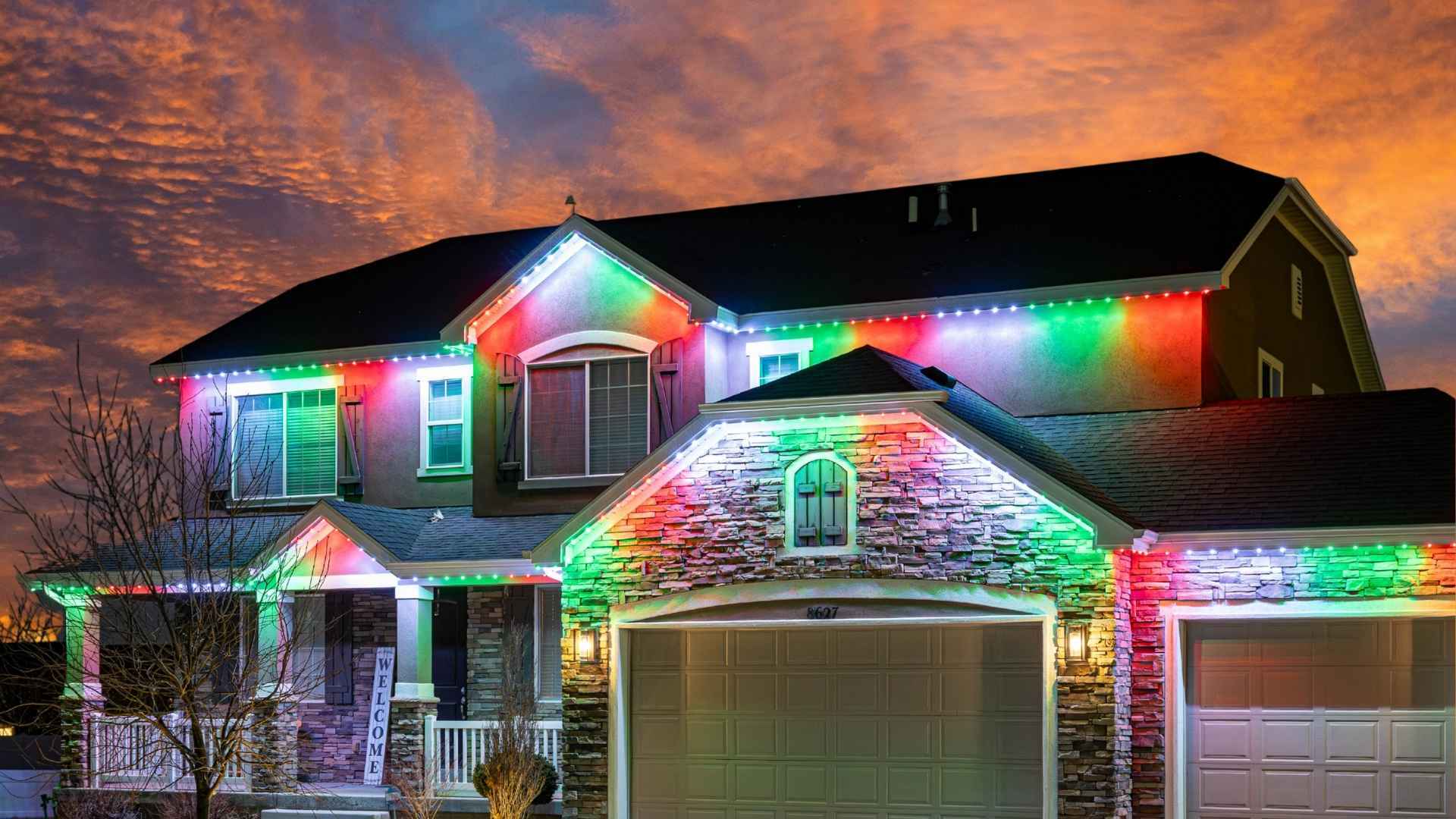
1 min read
Projector lights sit on a stake in the yard and throw moving dots, snowflakes, or shapes onto whatever wall they're pointed at. Permanent Christmas...
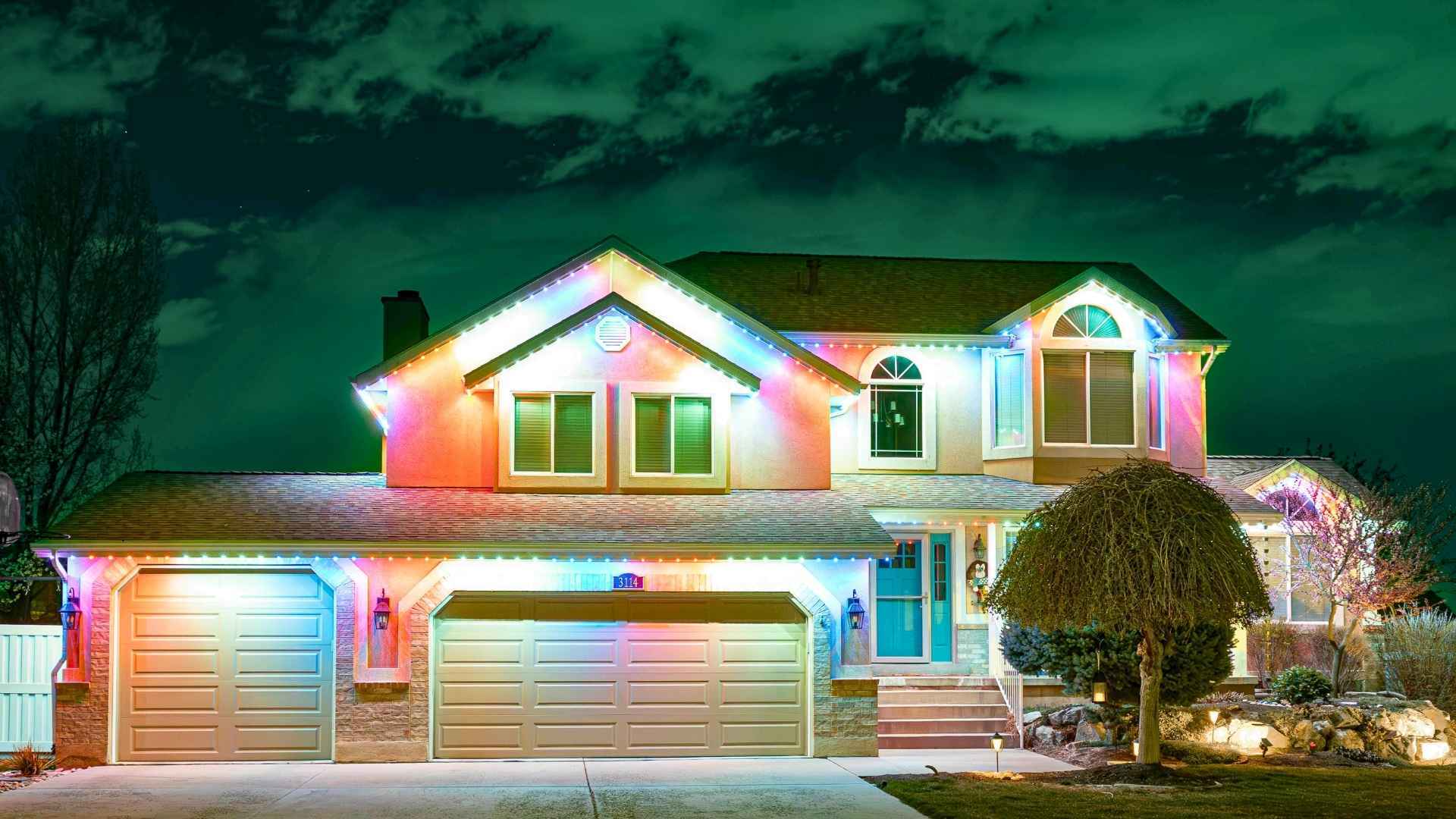
When you get permanent lights, you choose how much of the house they cover: just the front roofline, the front and sides, or the full perimeter...