Can You Get Permanent Lights on a Townhome, Condo, or Rental?
Most conversations about permanent lighting picture a detached house with a roofline that belongs to one owner from end to end. Plenty of people live...
Table of Contents
Every commercial property owner eventually runs the same calculation. Seasonal lighting goes up in November, comes down in January, and sits in storage for the remaining ten months. The installation cost recurs every year. The appearance is inconsistent. And for a restaurant, a hotel, an HOA community entrance, or a corporate campus that operates year-round, a two-month lighting window makes little practical sense as a long-term investment strategy.
Permanent LED Commercial lighting resets that calculation entirely. A system that installs once, operates on a programmable schedule, and can shift colors and patterns on demand turns exterior lighting from a seasonal expense into a standing property asset. Commercial operators across industries are recognizing this shift, and the properties making the move early are the ones that tend to look the most intentional from the street.
The exterior of a commercial property does more than provide visibility after dark. It signals to customers, guests, and passersby what kind of operation runs inside. A polished roofline, a well-lit entry, and a consistent visual identity communicate care and professionalism before anyone steps through the door. Conversely, a dark or haphazardly lit exterior raises questions not loudly, but persistently.
What makes permanent LED particularly well-suited to commercial settings is the flexibility it provides without the overhead. Property managers aren't coordinating seasonal vendors or managing installation windows. Business owners aren't losing weekends to temporary light strings that look different every year. The system is in place, it's consistent, and changing it for any occasion a holiday, a local event, a grand opening requires nothing more than an update through the Trimlight Edge app. For operators managing time and staff carefully, that distinction matters.
Restaurants compete on atmosphere long before a guest orders anything. The exterior is the opening impression. The lighting in the parking lot, along the roofline, and framing the entry sets the tone before the host stand comes into view. Permanent LED gives restaurant operators the ability to manage that impression deliberately and change it as often as the menu does.
Seasonal shifts are particularly useful for food and beverage operators. Warm amber tones for fall dining. Deep red for Valentine's weekend. Green for St. Patrick's Day. Festive white for the December calendar. Each transition happens through the app with no physical crew and no disruption to the dining room. For a restaurant that books private events and wants the exterior to match the occasion inside, that level of control is genuinely useful not just aesthetically, but operationally.
Restaurants compete on atmosphere long before a guest orders anything. The exterior is the opening impression the lighting in the parking lot, along the roofline, and framing the entry sets the tone before the host stand comes into view. Permanent LED gives restaurant operators the ability to manage that impression deliberately and change it as often as the menu does.
Seasonal shifts are particularly useful for food and beverage operators. Warm amber tones for fall dining. Deep red for Valentine's weekend. Green for St. Patrick's Day. Festive white for the December calendar. Each transition happens through the app with no physical crew and no disruption to the dining room. For a restaurant that books private events and wants the exterior to match the occasion inside, that level of control is genuinely useful not just aesthetically, but operationally.
For bars, event halls, and entertainment venues, the exterior does marketing work on every night the system is running. Distinctive color programming tied to a venue's brand identity creates visual recognition along a commercial corridor that static signage rarely achieves after dark. Guests photograph it, reference it when giving directions, and associate the look with the experience inside. The exterior becomes part of what the brand actually is.
For lodging operators, the exterior is the product before the product. It's what a potential guest sees in search results photos, what a repeat guest remembers pulling up to, and what a first-time visitor judges before any interaction with staff. Permanent LED gives hotels control over that impression every night of the year.
A hotel's guest experience doesn't begin at the front desk it begins the moment a guest sees the property from the parking lot or the road. For boutique hotels and independent lodging operators who can't rely on brand recognition the way larger chains can, that first visual moment carries significant weight. A well-lit, consistently styled exterior communicates that the property is managed attentively, which is exactly what independent lodging needs to signal.
Permanent LED gives hotel properties the kind of exterior flexibility that used to require significant seasonal budgets. Adjusting colors for a regional festival, a holiday weekend, or a community celebration takes minutes, not a maintenance request. That responsiveness, the ability to look current and intentional without scheduling a crew is a real competitive advantage for properties operating in tourism-driven markets where visual differentiation matters.
Hotels that invest in distinctive exterior lighting consistently find it shows up in guest photos, social posts, and review platforms without any intentional effort on their part. A roofline or entry feature that looks striking at night is the kind of detail that ends up shared — which means the property's exterior is generating organic exposure every evening it's lit up well. For independent lodging operators working with limited marketing budgets, that kind of ambient visibility is difficult to put a number on and nearly impossible to replicate with signage alone.
Managed communities have a unique lighting challenge: the decisions are collective, the logistics are complex, and the results are visible to every resident and every visitor. Permanent LED Lighting simplifies that dynamic in ways that seasonal approaches simply can't replicate.
Holiday lighting for a managed community has always carried a logistical burden that doesn't match the outcome. Coordinating vendors, managing installation windows across common areas, budgeting for seasonal takedown — the effort is real, and the results are often inconsistent from year to year. Permanent LED Lighting changes what's possible at the community level.
HOAs that invest in permanent lighting for entryways, monument signs, clubhouses, and shared structures gain a system they control once and operate indefinitely. An association board can schedule a neighborhood-wide display for Thanksgiving, shift to a winter color palette for December, adjust for Independence Day, and return to a neutral accent mode for the remainder of the year — all from a single account through the Trimlight Edge app. There are no seasonal contracts to renegotiate, no vendors to reschedule, and no gap years where the community entrance looks incomplete during the holidays.
In markets where HOA communities are competing for prospective buyers, the visual quality of common areas and entryways influences perception immediately. Permanent lighting on community infrastructure is a visible, tangible amenity that communicates pride in the neighborhood — the kind of detail that prospective residents notice on a first visit and current residents appreciate every evening they come home.
Corporate properties tend to underinvest in exterior lighting relative to what the space is worth as a visual asset. That's partly habit and partly because the decision lives in an unclear spot between facilities and marketing. Permanent LED gives both sides a clear answer.
Commercial exterior lighting for office properties often sits in an ambiguous space managed by facilities when something breaks, ignored otherwise. Permanent LED moves it from maintenance territory into intentional property management. The exterior becomes something that works on the building's behalf rather than something that occasionally needs to be dealt with.
Corporate campuses and office buildings use permanent lighting to mark milestones and show up for community moments: blue and gold for a company anniversary, red and blue for a fundraising awareness campaign, green and white for a sustainability initiative. The system sits in a consistent neutral accent mode on an ordinary evening and can be programmed for an entirely different look before a morning event — with no coordination between departments, no vendor call, and no crew onsite.
For commercial real estate operators and property managers responsible for the appearance of multiple buildings, permanent LED eliminates the inconsistency that plagues seasonal lighting across a portfolio. Every property carries the same visual standard. Every holiday is handled the same way. And the per-property time investment drops dramatically once the systems are in place.
Not every permanent lighting company is built for commercial work. The warranty terms, installation standards, and product reliability that matter on a residential home matter significantly more on a property that operates every night and can't afford a system that underperforms.
Trimlight has been installing permanent LED systems since 2010, making it the original company in the space operating more than a decade before most of the alternatives that are now competing for the same commercial projects. That history means a track record on commercial structures across climates, building types, and installation complexities that newer entrants simply don't have.
Every Trimlight system carries a lifetime product warranty, which is the functional opposite of what seasonal products or newer competitors offer. JellyFish Lighting, by comparison, backs its systems with a five-year warranty. For a commercial property making a long-term infrastructure investment, that warranty difference is worth examining closely a permanent system that requires replacement in year six isn't permanent in any meaningful sense.
The Trimlight Edge app handles colors, patterns, brightness, and scheduling with a level of control that commercial operators find immediately useful. Scheduling a display for a specific date range, automating the on/off cycle to align with business hours, or running a color combination tied to a regional event — all of it is managed through the same interface that runs residential systems, with no commercial-specific learning curve.
For multi-location operators, working with a Trimlight dealer to coordinate programming across properties allows for consistent brand expression without site-by-site manual management. The flexibility is there whether a business operates one location or a dozen.
All Trimlight installations are handled by factory-trained technicians through a network of more than 300 authorized dealerships across the country. For commercial properties, that means a consistent installation standard regardless of building size or type, and a single point of contact for service and support after the system is live.
Trimlight's surface-mounted downlighting system is particularly useful for commercial applications. It installs without any cutting into the building structure, which matters for leased commercial spaces and properties with architectural or ownership restrictions on physical modifications. The downlighting delivers clean, directed illumination for pathways, building perimeters, and entries — the areas that do the most work for commercial curb appeal — without requiring a structural change to achieve it.
Commercial projects follow the same basic process as residential work, scaled to the scope of the property. A Trimlight dealer visits the site, assesses the linear footage and lighting zones for each application — roofline, downlighting, entry features, monument signs — and provides a project estimate. Pricing follows the same per-linear-foot structure used in residential installations, generally ranging from $18 to $35 per foot depending on the application.
For HOAs and multi-building properties, Trimlight dealers regularly work with phased installation plans that allow communities and commercial operators to budget across multiple seasons rather than absorbing the full project cost in a single year. The system can expand as the budget allows, with the same Trimlight Edge app managing all zones from the start.
A Trimlight dealer visits the property, measures the relevant architectural features, identifies lighting zones, and provides a project estimate based on linear footage.
Yes, Trimlight's lifetime product warranty applies to commercial installations the same as residential ones, which distinguishes it from competitors that offer five-year or limited coverage.
It is well established in criminology that consistent exterior lighting deters property crime by removing the cover of darkness and signaling that a home is active and occupied. Trimlight's system means there are no gaps in coverage and no dark nights that leave your property more vulnerable.
Yes, multi-location operators can work with their Trimlight dealer to coordinate programming across properties, allowing for consistent brand colors and scheduling without site-by-site manual management.
Stay connected with Trimlight. Subscribe for monthly news, product updates, and outdoor lighting inspiration.
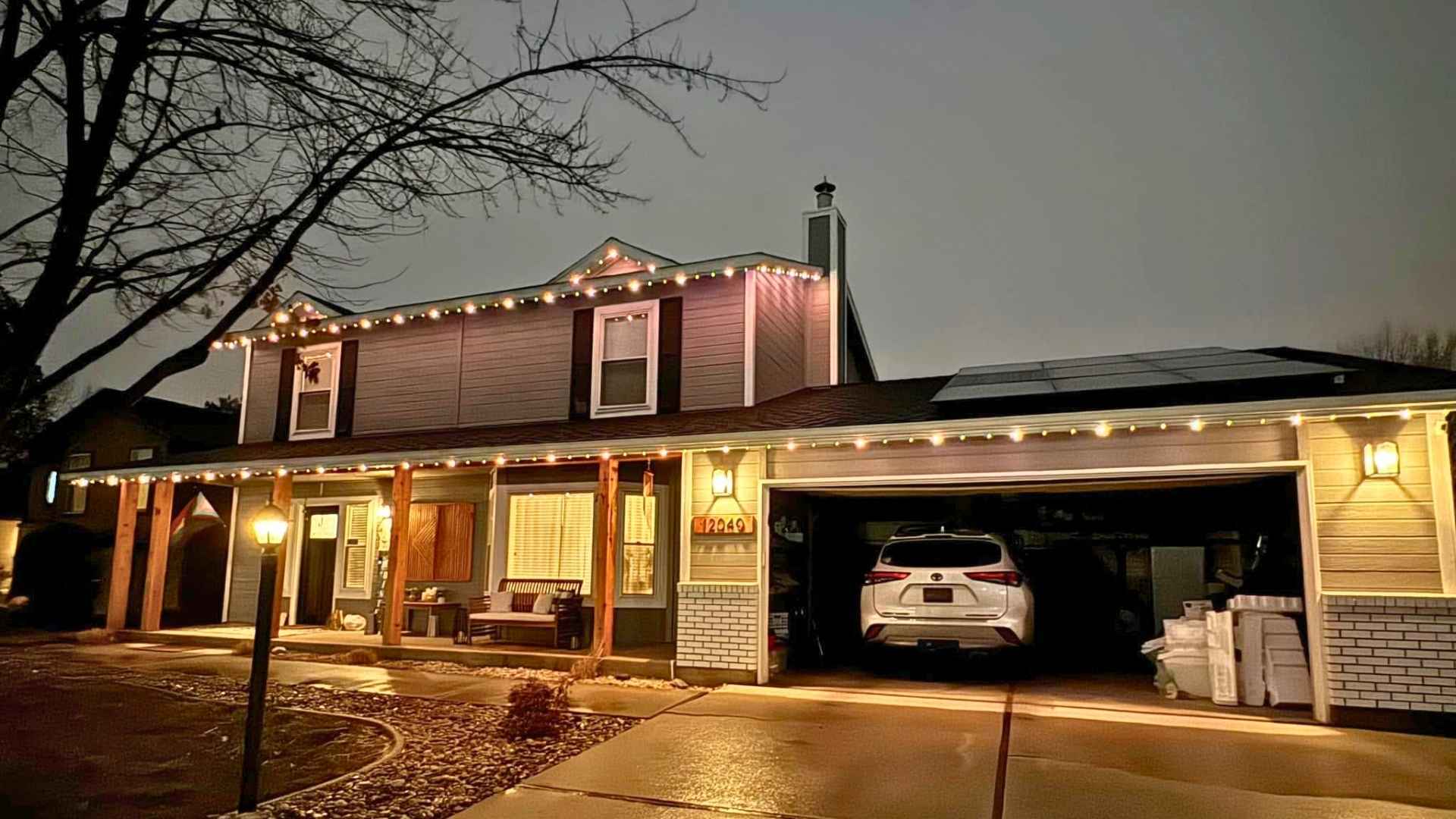
Most conversations about permanent lighting picture a detached house with a roofline that belongs to one owner from end to end. Plenty of people live...
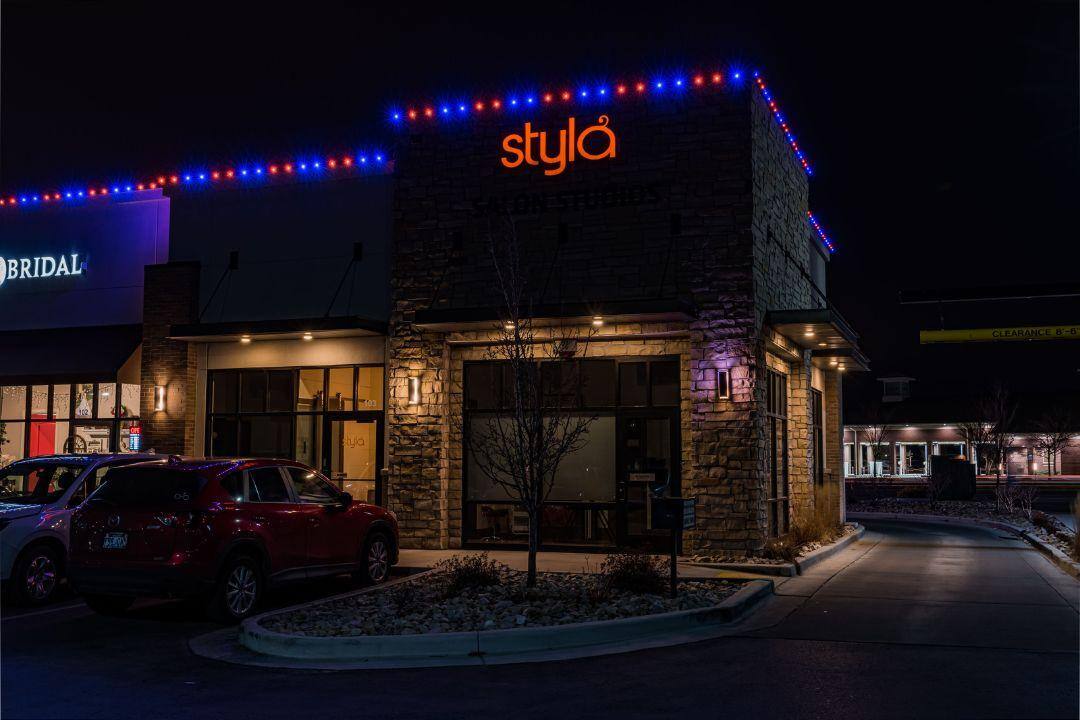
When your commercial building stands out, people notice. Exterior lighting can make your business more attractive and welcoming. It creates a sense...
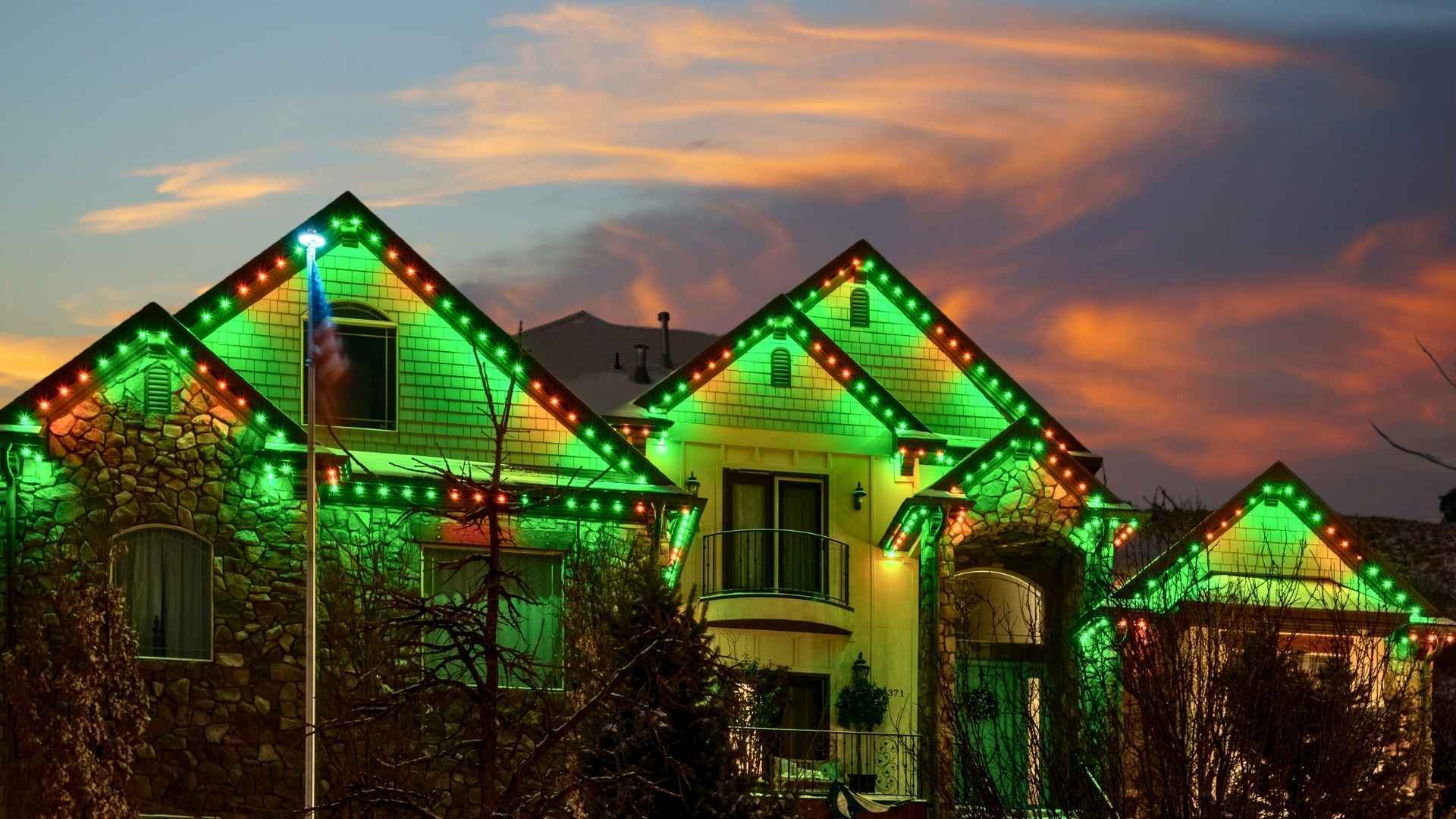
Hanging Christmas lights on a steep roof is one of the riskiest chores of the holiday season. Once a roof climbs past a 4/12 pitch, footing gets far...