Permanent Roofline Lighting — Installation Process and What To Expect
For most homeowners, the decision to move forward with permanent roofline lighting comes down to two questions: what does it look like when it is...
6 min read
Building a custom home comes with a long list of wiring decisions. Where the outlets go, how many network drops each room needs, which wall the television mounts on. Exterior lighting rarely makes that list. It tends to surface months or years after move-in, once a homeowner starts researching permanent roofline lighting and calls a dealer, only to learn the fascia, siding, and landscaping that would have made the wiring simple are already finished.
This piece is for anyone still in the framing or pre-drywall stage of a build who wants to skip that version of the story. It covers what pre-wiring for permanent lighting actually involves, how it compares to retrofitting a finished home, the narrow window in a build schedule when the decision is easy to make, and what's specifically worth raising with a builder or electrician before the walls close up.
Every home eventually gets some form of permanent exterior lighting added, whether that happens during construction or years into ownership. The difference isn't whether the system can be added to a given house, since Trimlight installs on new builds and existing homes alike. The difference is how much of that process is simple versus how much of it involves working around decisions that were already locked in.
Pre-wiring means adding the low-voltage wiring, mounting points, and controller line for a permanent lighting system while a home is still open, typically somewhere between rough framing and drywall. It doesn't require choosing a final light pattern or color palette. It only means reserving a path for the wiring and a spot for the controller before those areas are sealed behind finished walls and trim.
Because the system runs on a low-voltage, 12V setup, the wiring itself is minor compared to a home's standard electrical work. The planning is really about timing and coordination: making sure the right questions get asked while the answer is still cheap to act on.
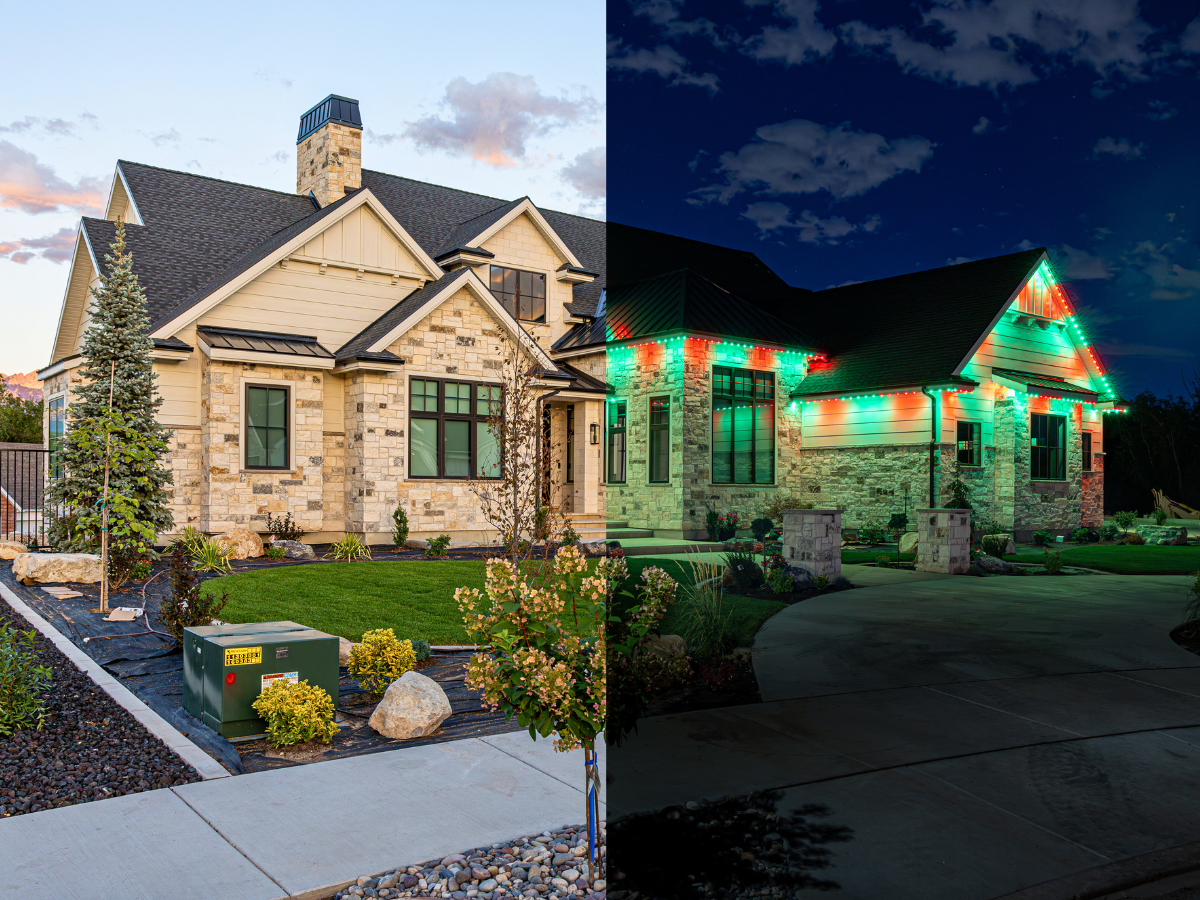
What's worth planning:
Pros:
Cons:
Retrofitting means adding a permanent lighting system to a home that's already built and finished. This is how most Trimlight systems get installed today, and it works well. Authorized, factory-trained technicians mount the channel to existing fascia and route wiring through the attic where access allows, or through a color-matched exterior wire cover channel where it doesn't, all without opening drywall or modifying the gutter system.
Pros:
Cons:
Once the basic difference is clear, the practical question is where pre-wiring actually saves time, money, or hassle, and where the two approaches land in roughly the same place.
Trimlight's installed pricing runs $18 to $35 per linear foot, with most residential projects landing between $2,000 and $6,000 or more depending on the size and scope of the roofline (the full pricing breakdown covers how that range gets calculated). That part of the cost doesn't change based on when the wiring goes in.
What does change is the labor around it. Adding a controller line and a wiring path during framing is a modest addition to an electrician's existing scope on the job. Opening a finished wall, or trenching a finished driveway, to do the same work later adds cost that has nothing to do with the lighting system itself. It's the cost of undoing finished work to make room for something that could have been planned earlier for next to nothing.
Retrofitting doesn't damage a home. Technicians are trained to mount the channel without touching a home's gutter or drip edge. But it does mean working within the constraints of whatever is already in place: mature landscaping that has to be protected during a driveway conduit run, or a finished soffit that limits where an attic wiring path can enter. Pre-wiring sidesteps all of that simply because the constraints don't exist yet. There's no lawn to protect, no finished ceiling to route around, no landscaping bed to work carefully near.
Of everything on this list, controller placement is the one decision most worth getting right early. The controller needs a dedicated low-voltage line and a nearby power source, and it's typically tucked into a garage, attic, or utility closet where it stays out of sight. Choosing that spot during framing costs nothing beyond a short conversation. Moving it after drywall is installed usually means opening a wall to run a new line, which is exactly the kind of work pre-wiring is meant to avoid.
None of this locks in a design. The actual color palette, pattern selection, and scheduling happen later, through the Trimlight Edge app, and can change at any point after installation. Pre-wiring only decides where the physical infrastructure lives, not what the lights will look like on day one.
The window for this conversation is narrower than most homeowners expect. It opens around rough framing, once walls are up but before insulation and drywall go in, and it closes as soon as those finishes are installed. Raising it during the walkthrough after move-in is too late for the wiring itself, though a full retrofit remains just as viable at that point.
The deciding question isn't whether permanent lighting is worth having. It's whether to make the wiring decision while it's still cheap and easy, or to make it later when it involves undoing finished work. For anyone already coordinating dozens of other build decisions, adding one short conversation about controller placement and fascia coordination is a small ask that avoids a much larger one down the road.
It also pays off sooner than most new homeowners expect. The same system that gets pre-wired during a build handles Christmas, the Fourth of July, Halloween, and everyday curb appeal without any additional wiring work once the initial installation happens, and it's often that first holiday season in a new house that gets homeowners thinking about exterior lighting in the first place. Planning ahead means that thought doesn't turn into a scramble to find an open install slot before December.
Raising this with a builder doesn't commit anyone to a final design or a locked-in budget. It just keeps the option open at the one point in a build where keeping it open costs almost nothing, instead of letting it close by default because nobody brought it up before the walls went up.
Yes. Most Trimlight systems are installed on finished homes, with technicians routing wiring through the attic or an exterior wire cover channel and mounting the patented channel directly to existing fascia.
The wiring is low-voltage, so many builders fold it into the electrician's existing scope rather than treating it as a separate trade. Your local trimlight dealer can handle this process
As early as the rough framing stage, before insulation and drywall go in. That's the window when the wiring path and controller line are still simple to add.
As long as the channel line and controller location stay consistent, minor changes to fascia materials or color don't affect the wiring itself.
Authorized Trimlight dealers, of which there are more than 300 nationwide, regularly work directly with builders and homeowners during construction to plan wiring and channel placement, in addition to the retrofit installs they handle on finished homes every day.
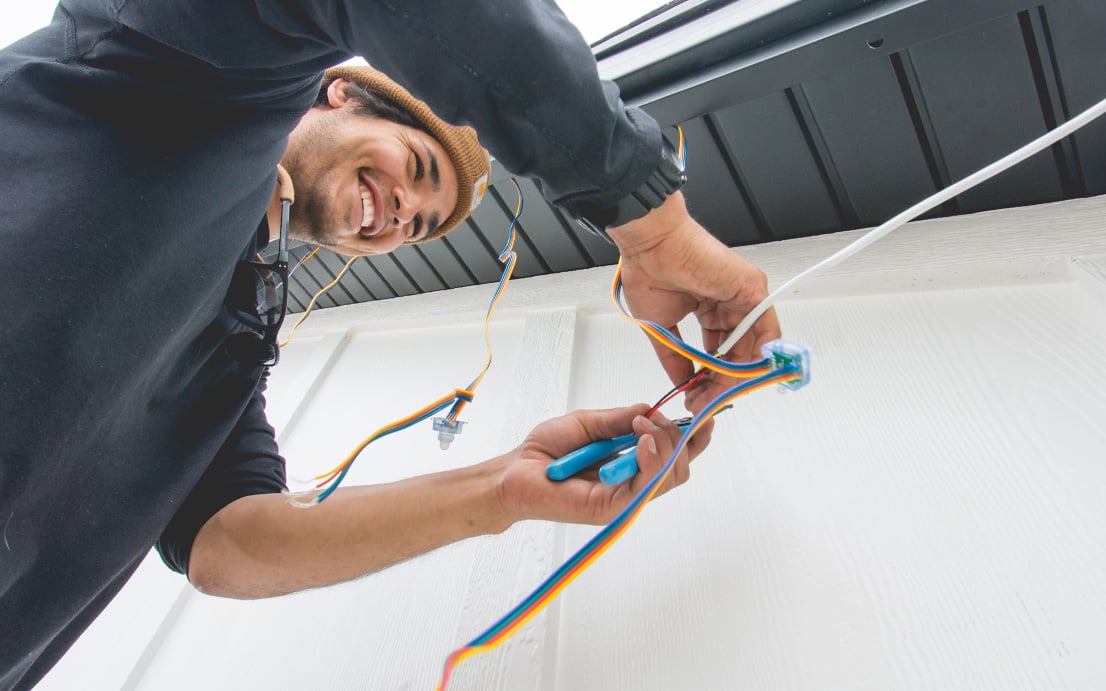
For most homeowners, the decision to move forward with permanent roofline lighting comes down to two questions: what does it look like when it is...
1 min read
Permanent outdoor lighting has turned into a crowded category, and Gemstone Lights is one of the names that comes up most often when homeowners start...
Exterior lighting problems tend to fall into two categories: fixtures exposed to the weather that wear down over time, and fixtures aimed outward...