Getting a Permanent Christmas Lights Quote? Here's What It is Include.
Every fall, more homeowners decide this is the year they stop climbing ladders in December. The first real step toward permanent Christmas lights is...
9 min read
Trimlight : 10/7/26, 3:00 PM
Table of Contents
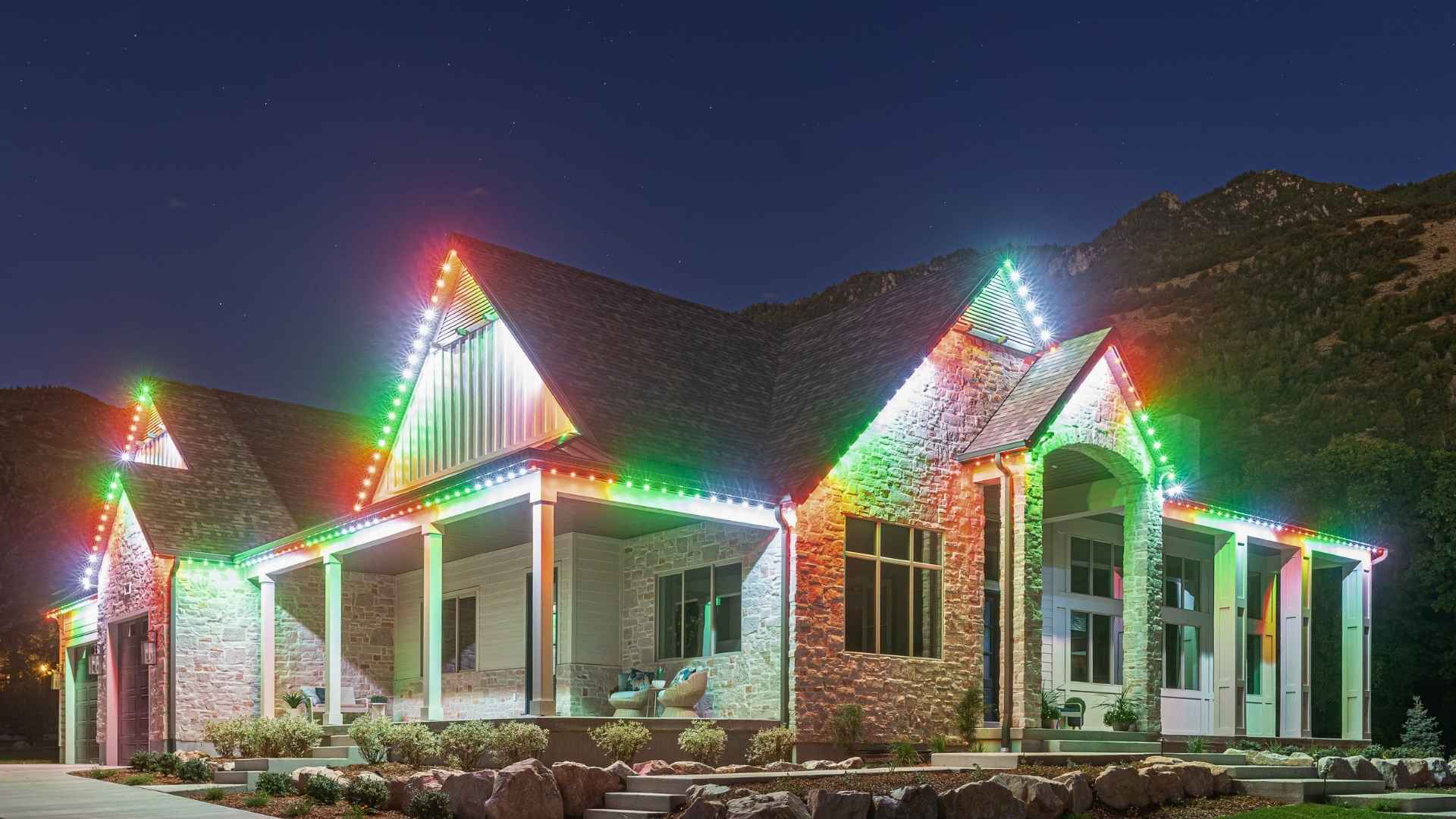
When you get permanent lights, you choose how much of the house they cover: just the front roofline, the front and sides, or the full perimeter around all four sides. For most homes, the front roofline is the right place to start, since it's the side the street sees and needs the least footage. Going beyond the front makes sense when the sides are visible from the road, you live on a corner lot, or you spend your evenings in the backyard.
The best choice depends on how your home is seen and how you use it, not just the budget. The sections below explain what each coverage level includes, which homes each one suits, and how to start with the front without making it harder to add more later.
Every home is measured individually, but nearly every project falls into one of three shapes. Here's what each one covers and the kind of homeowner who tends to choose it.
What it covers: Just the street-facing eaves, plus whatever gables you can see from the curb. On an average one-story house, that's often somewhere around 80 to 150 feet of lighting.
Best for: Homes viewed mainly from the street, homeowners who want to see the system in action before going bigger, and anyone whose priority is curb appeal for holidays and everyday evenings.
The trade-off: The lighting ends at the front corners, so the sides and back of the house stay dark. On homes where those sides are visible from a road or a neighbor's yard, that cutoff can be noticeable.
What it covers: The front roofline plus one or both side eaves, so the light turns the corner and continues partway or fully down the house.
Best for: Homes where the sides are visible as you drive up, especially on wider lots or streets where people approach from an angle. It's a middle ground that softens the "front only" look without the footage of a full wrap.
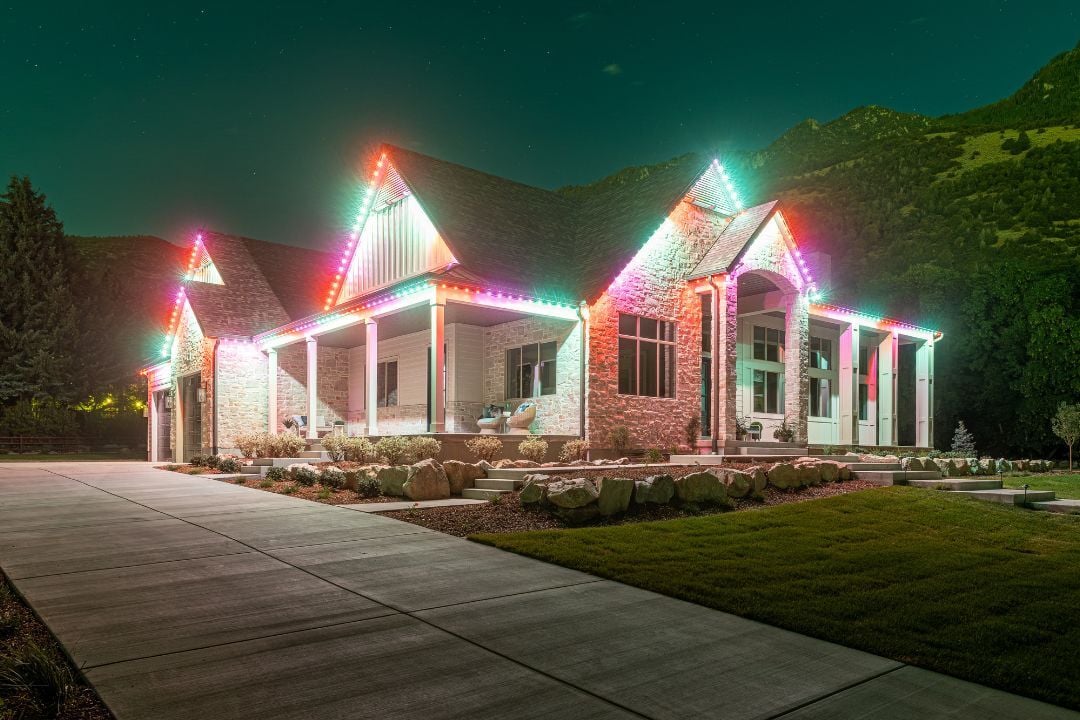
What it covers: Every side of the house, wrapping continuously around the roofline. Expect the footage to land at roughly double or triple what a front-only layout would need.
Best for: Homes that are seen from several directions, backyards that get as much use as the front porch, and homeowners who want the house to read as fully lit from every angle.
The trade-off: More footage means a larger project total. Our Trimlight pricing guide shows how each coverage level tends to compare on cost.
Instead of starting with a number, start with how the home is seen and lived in. These questions usually point clearly toward one coverage level.
Stand at the curb, then walk to the end of the block and look back. If the front is the only side anyone really sees, front-only coverage puts the light exactly where it counts.
If one side faces a busy road, a park, or an open lot, that side is effectively a second front, and leaving it dark can make the lighting look unfinished.
The street sees the front, but you might see the back far more often. If your evenings happen on a back patio, around a fire pit, or in a pool area, lighting the rear roofline turns that space into something you enjoy every night, not just a view for passersby.
For covered outdoor spaces, it's also worth asking about Globe Lights, which mount permanently in a pergola and replace the string lights that sag and fade each season. Pairing them with rear roofline lighting can make the backyard feel as finished as the front.
If the backyard is where you unwind, our guide to creating a calm backyard with Trimlight shows how soft colors and dimmed evening settings can shape that space.
This is the detail many homeowners don't think about until the lights are on. A front-only run that stops at a corner can look intentional on some homes and abrupt on others, depending on how much of the side is visible.
Ask your dealer to show you where each option would end. Sometimes extending just a few feet down each side, or to the next natural break in the roofline, gives a front-focused install a much more finished look. Our before-and-after curb appeal photos are a good way to see how different homes handle it.
Gentle roofline lighting helps a home stay visible at night without the glare of floodlights. If that's part of why you're installing, consider whether the sides and back, where entries and gates often sit, need light as much as the front does. Our breakdown of how permanent lighting replaces motion-sensor floodlights explains why lighting every side of the house matters for this goal.
If the lights will mainly come on for December and a handful of other holidays, the street view is usually what matters most, and front coverage delivers the bulk of that impact. A big Christmas display reads from the road, so that's where the footage works hardest.
Plans often change once the system is up, though. Plenty of owners start using soft warm whites or subtle accent colors on ordinary evenings, and that everyday glow tends to matter more on the sides and back, where you actually come and go after dark.
If you expect the lights to be part of your nightly routine, not just your holiday routine, that's a good reason to think beyond the front. Our guide to year-round Christmas lights shows how homeowners use the same system across all twelve months.
Budget matters, but it doesn't have to be the deciding factor between "some" and "none." Because coverage can be expanded later, some homeowners light the front now and add sides or the back in a future season.
It can also help to think about cost over the life of the system rather than just the upfront number. Our cost-per-year breakdown shows how a larger install spreads out over years of use.
Every property is different, but certain types of homes tend to point toward the same choice. If one of these sounds like yours, it's a good place to start the conversation with your dealer.
Ranch homes tend to have long, uninterrupted eaves across the front, which makes front-only coverage look clean and complete. The low roofline also keeps the light close to eye level, so even a front-only install makes a strong impression from the street.
Because the sides of a ranch are often short, extending around one or both corners usually adds less footage than it would on a deeper two-story home. That makes "front and sides" an easy step up when the corners are visible from the road.
With two street-facing sides, corner lots almost always look best with at least the front and the street-facing side lit. Lighting only the front leaves half of the home's public face dark, which drivers coming from the side street notice right away.
Homes at the end of a cul-de-sac are often viewed straight on, with the sides angled away from the street. Front-only coverage usually reads as complete here, which makes it a natural fit.
If the back of the house faces open space or a trail, though, the rear roofline may be more visible than you'd expect.
If summer evenings, game nights, and holiday gatherings happen out back, full perimeter or front-plus-back coverage gives you the same control over color and mood where your guests actually are. Static warm whites for dinner, team colors on game night, and a full holiday display in December all come from the same app. If your backyard includes a screened pool area, permanent pool cage lighting can extend the same system into the enclosure.
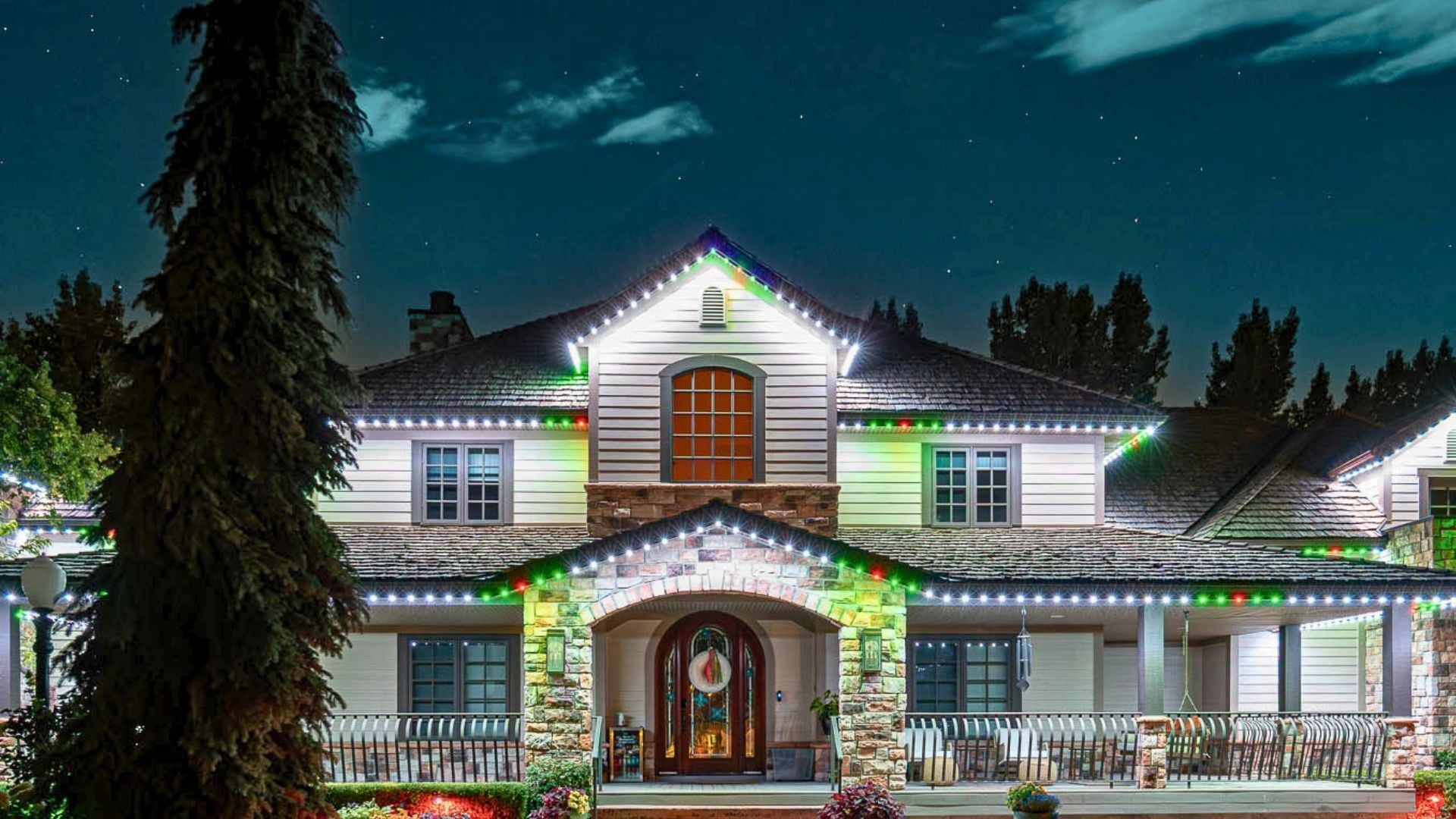
Two-story homes add footage on the upper rooflines, so a full wrap grows quickly. Many owners light the full front, including the upper gables, and add sides based on visibility.
Because upper sections take more access work, it's worth deciding during the first install whether you'll want them lit eventually. Planning them in from the start is often simpler than treating them as a separate project later.
The front gables on a two-story home are usually the most striking part of the display, so they're the last place to cut if you're trimming the scope.
Townhomes and other attached homes usually have one exposed front and sometimes one side. Coverage typically stops at the property line, which makes front-only the default for most owners. Shared rooflines come with their own considerations, which we cover in our townhome, condo, and rental guide.
Most coverage decisions turn out well, but a few common oversights can leave a finished system looking less complete than it should. They're easy to avoid once you know to look for them.
Front-only coverage should still include any gable peaks you can see from the street. Lighting the level eaves while skipping the peaks above them flattens the shape of the house, which is the opposite of what roofline lighting is supposed to do.
If budget is tight, trim footage from a less visible side before you cut the front gables.
It's natural to judge coverage from the curb, but you'll also see your home from the driveway, the back patio, and the windows of the house itself. Walk those spots before deciding, and make sure the coverage you choose looks right from the places you spend time.
A front-only install is a great starting point, but deciding later that you want more without having mentioned it up front can make expansion more complicated than it needs to be.
Even a rough idea, like "probably the back patio in a year or two," gives your dealer something to work with during the first install.
The same applies to node spacing and channel color, which carry over to every section you add, as covered below.
Choosing front-only today doesn't lock you out of a fuller display down the road. A little planning during the first install keeps future additions simple.
If there's any chance you'll want the sides or back lit later, say so during the walkthrough. Your dealer can lay out the first install with those future sections in mind, which tends to be easier than treating each expansion as a brand-new project. The same goes for areas beyond the house, like a fence line, which our post on permanent fence edge lighting covers.
It also helps to keep the dealer's original measurements and quote on file. When you're ready to expand, they make it quicker to price the next section.
Your home runs on a single spacing throughout, so whatever you pick for the front will carry over to any sections you add later. You can compare the look of each option in our node spacing guide. If the sides or back have different trim than the front, point that out too, so channel color is planned for the whole house.
The coverage you choose today doesn't have to be your final answer. Trimlight is built so a front-only install and a full perimeter system look equally finished, and so one can grow into the other.
Each run of Trimlight's patented channel is cut on site and color-matched to the trim, with the wiring tucked inside. When you add the sides or back later, the new sections are measured and fitted the same way, so the house doesn't look like it was lit in two phases. Our explainer on Trimlight's two-step fascia design shows how the channel stays hidden by day.
Because the spacing stays the same across the system, the new light lines up with the old. Once zones are set up by your dealer, every section can also be controlled from the same Edge app, whether it went up this year or three years from now.
Expansions are handled by the same network of more than 300 authorized dealers that installed the original system, with Trimlight's lifetime warranty on parts and a minimum one-year labor guarantee from your dealer. With permanent lighting experience going back to 2010, Trimlight dealers have planned plenty of homes that started at the front and grew from there.
Most homes start with the front roofline, since it's the side the street sees and needs the least footage. Add the sides or back if they're visible from the road or you use the backyard often.
Front-only works best for homes seen mainly from the street, while full perimeter suits homes visible from several sides or with a well-used backyard.
Front-only is the most common starting point, since it covers the street-facing curb appeal at the lowest footage.
Many two-story owners light the full front, including upper gables, then add sides based on how visible they are from the street.
Yes. Many dealers quote front-only and full-perimeter options so you can compare coverage and cost side by side.
Full perimeter coverage puts light on every side of the house, including the side and rear entries that front-only coverage leaves dark.
Stay connected with Trimlight. Subscribe for monthly news, product updates, and outdoor lighting inspiration.
Every fall, more homeowners decide this is the year they stop climbing ladders in December. The first real step toward permanent Christmas lights is...
Trimlight's lifetime warranty covers the parts of your system for the manufacturer's estimated lifespan of those components, not an unlimited number...
Trimlight has earned a reputation for leading the permanent holiday lighting revolution, and it is easy to see why. Homeowners can enjoy vibrant, ...