Will Permanent Lights Bother Your Neighbors?
Lighting up your home every night is a different commitment than hanging a strand of bulbs for three weeks in December. Once the lights are...
Table of Contents
Homeowners considering permanent roofline lighting often pause at the same question before requesting a quote: will my HOA even allow this? It is a fair question. Most homeowners associations have rules about exterior lighting, and those rules were mostly written with strands of seasonal lights in mind rather than a permanently installed system. The honest answer is that a permanent lighting system does not automatically violate HOA rules, but it is not automatically exempt from review either, since it is still a change to the exterior of a home.
This guide covers what HOA rules typically address when it comes to exterior and holiday lighting, why permanent systems tend to clear architectural review more easily than traditional lights, and how to approach your own HOA board before scheduling an installation.
Before getting into whether permanent lighting specifically causes problems, it helps to understand what most HOA governing documents actually regulate. Community rules, usually written into a set of covenants, conditions, and restrictions along with a separate architectural guidelines document, tend to focus on a handful of recurring concerns rather than banning categories of products outright.
Most communities require some form of approval before a homeowner attaches anything new to the exterior of their home, whether that is a satellite dish, a security camera, or a lighting system. The CC&Rs typically establish that approval is required, while a separate architectural guidelines or design standards document usually contains the specifics, things like approved fixture styles, maximum brightness levels, and placement requirements.
A permanent lighting system generally falls under this general exterior modification provision rather than a community's holiday decoration section, since that section is usually written for temporary displays. If a board has not specifically addressed permanent lighting before, that gap does not mean automatic permission. It usually means the request gets evaluated like any other architectural change instead.
Many HOAs separately address temporary holiday displays with their own timing rules, commonly allowing installation to begin several weeks ahead of a major holiday while expecting removal within about two weeks afterward, and some communities also set specific hours for when lights need to be switched off. Those provisions exist for decorations that are supposed to come down, and since a permanently installed system is not a temporary decoration in the same sense, it generally falls outside this specific rule even though it might be used the same way during the season.
Beyond timing, HOA boards tend to care most about how consistent a display looks compared to the rest of the community. Mismatched colors, visible extension cords, and lights strung in a way that looks temporary or haphazard are common complaints that end up in board meeting notes.
This is less about restricting personal expression and more about protecting property values across the community, since a neighborhood where every home looks noticeably different in how it is decorated can affect how the community reads as a whole, fairly or not.
It is also why boards often ask for specifics rather than approving a general category. A request that includes exact colors, mounting locations, and how wiring will be concealed tends to move through review faster than a vague request to add exterior lighting.
Once you understand what boards are actually screening for, it becomes clearer why permanent systems like Trimlight tend to have an easier time in review than the temporary lighting most rules were originally written around. For a broader look at how these systems work beyond HOA specifics, see what permanent holiday lighting actually is.
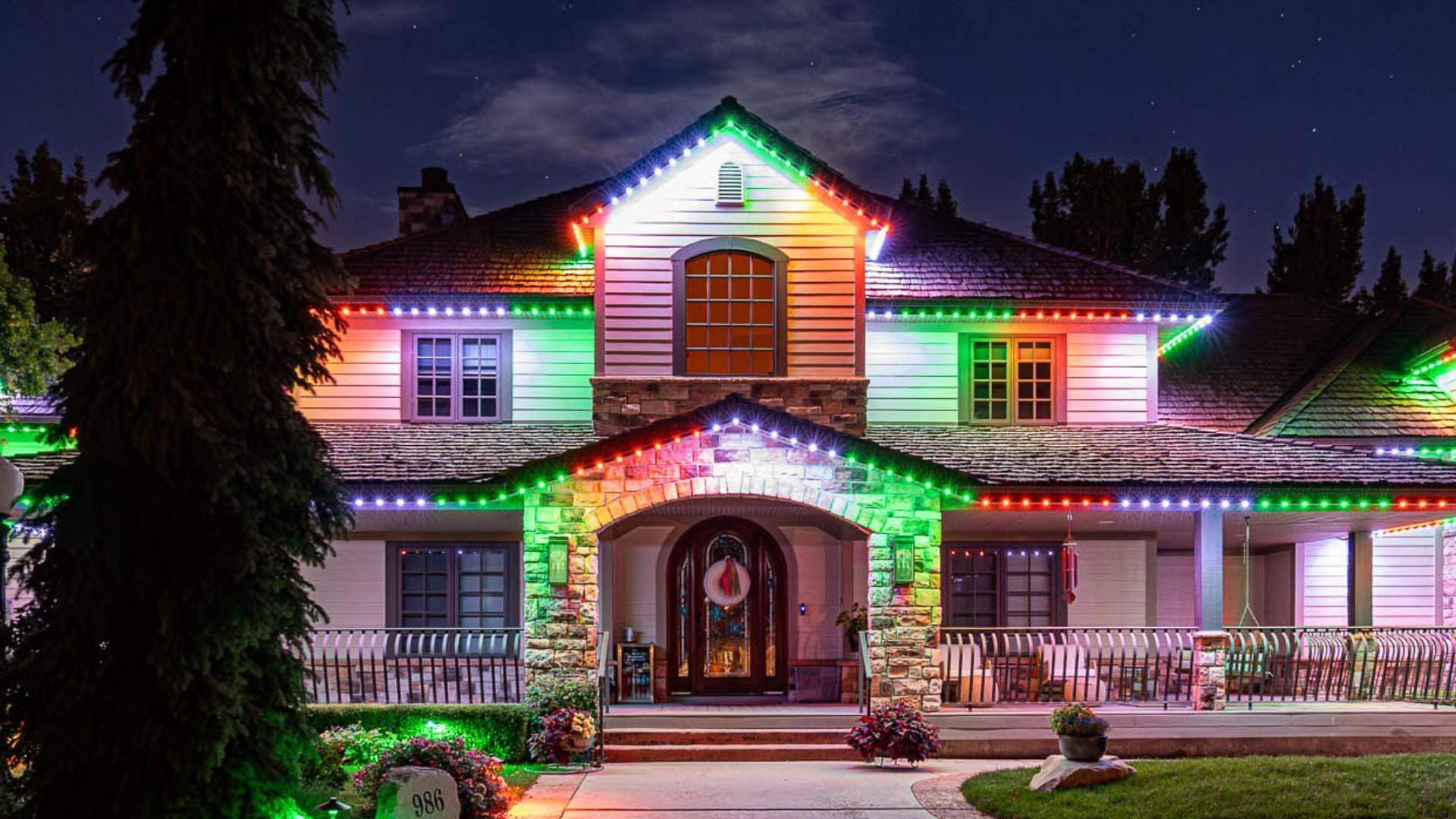
Trimlight's patented channel is available in a range of colors designed to match a home's existing trim, and the bulbs sit inside that channel rather than hanging loosely along the roofline. During the day, the result is closer to an unnoticeable trim detail than a visible lighting installation, which addresses one of the more common aesthetic objections boards raise about lights left up out of season.
That daytime appearance matters more than homeowners sometimes expect during review, since a board evaluating photos or a site visit is often picturing what the home looks like most of the year, not just during the two or three weeks the lights are actually turned on for a holiday.
Traditional string lights run wiring along gutters, roof edges, and shrubs, and that wiring is exactly what tends to come loose in wind or ice storms, creating the dangling wire complaints that generate HOA violation notices in the first place. A permanent system routes its wiring inside the channel itself, which removes that specific failure point from the equation entirely, one of several everyday headaches covered in Top 20 Problems Trimlight Solves For You.
One of the more common sources of HOA friction around holiday lighting is not the lights themselves but the removal date. Homeowners get busy, ladders come out less often in January than they did in November, and lights that are supposed to come down within a set window sometimes stay up well past it.
A permanent system sidesteps this specific issue, since there is nothing to physically remove. The lights can simply be turned off once the display window ends, which satisfies the spirit of most timing rules without requiring anyone to get back on a ladder.
Even with these advantages, most communities still expect a request to go through the normal approval process before installation, and starting that process well is what actually determines how smoothly it goes.
Start by reading your community's CC&Rs and any separate architectural guidelines before submitting anything, looking specifically for language about exterior lighting, fixtures, or attachments rather than assuming the holiday decoration section covers it. Knowing exactly which rule applies helps you address it directly in your request instead of leaving a board to guess at how your project fits.
A request that includes product specifications, available color options, and a description of how wiring is concealed tends to move faster through review than a general description of adding permanent lighting. Boards are evaluating a specific installation, not a product category, so specifics work in your favor.
Trimlight publishes an HOA information resource that covers exactly this kind of documentation, including how the system addresses common board concerns like uniformity and wiring, and it can be a useful starting point when preparing a request.
If your board has technical questions your own research does not answer, a local authorized dealer has typically been through this process with other homeowners in similar communities and can speak to specifics your board is asking about.
Some dealers are able to provide additional documentation or, in cases where a board wants more detail before voting, attend a meeting directly to answer questions. That is worth asking about if your community's process is more involved than a simple written request.
None of this replaces your own read of your community's specific rules, since every HOA writes its covenants differently and a board's discretion still applies. A professional measurement and quote from a dealer is also a reasonable point to loop in your board, since it gives you concrete details, like exact footage and color options, to include in your request rather than a hypothetical description.
Some communities have governing documents that were written before permanent, programmable lighting existed as a category, so they include a blanket restriction on permanent exterior lighting rather than any specific guidance on it. It is worth knowing that a rule like this is not necessarily the end of the conversation.
A clause that technically prohibits permanent lighting does not always reflect how a board would decide the same question today, especially if it was written with a different kind of installation in mind. There are cases where a handful of residents requested and received individual approval for a permanent lighting system despite a clause that technically ruled it out, and once those installations had been in place for a season without generating complaints, the board revisited the original language and opened the option to the rest of the community rather than continuing to handle each future request as a one off exception.
That kind of shift tends to start small. A single homeowner willing to ask the question, and a board willing to consider it on its own merits rather than defaulting to the existing clause, is often what gets the conversation started in the first place.
Boards are often more willing to reconsider a blanket rule once they have a real example in the neighborhood to look at rather than a hypothetical one. A clause written to prevent unpermitted, messy, or inconsistent lighting installations is addressing a specific concern, and once a board sees that a permanent system does not create that problem, the original justification for the rule becomes harder to defend as written.
This is part of why documentation matters even when a rule technically prohibits something outright. A request that shows exactly how the system is installed, wired, and maintained gives a board something concrete to evaluate against its actual concerns rather than against the general idea of permanent lighting.
It also helps that a board revisiting a clause is usually acting in the interest of consistency going forward, not just resolving one homeowner's request. Updating the language once, rather than approving individual exceptions indefinitely, is often the outcome boards prefer once they have seen the system work in practice.
If your community's documents explicitly prohibit permanent lighting, it is worth asking the board directly whether an exception or amendment has ever been considered before assuming the answer is final. Formally changing a covenant's language is a longer process than a standard architectural approval request, since it may require a board vote or a vote of the community depending on the association's bylaws, but it is a reasonable path to raise if the existing rule seems outdated or was written before systems like this were common.
Skipping the request might seem tempting, especially since a permanent system causes so few of the problems boards usually flag, but most CC&Rs treat an unapproved exterior change the same way regardless of how unobtrusive it turns out to be once installed.
Most governing documents give a board the right to issue a violation notice for any exterior change made without prior approval, and many go a step further by allowing fines that accrue for each day the violation continues. In more serious cases, some CC&Rs give the board authority to require that the system be removed entirely, regardless of how it looks once it is up.
That authority exists whether or not the finished result would have been approved if it had gone through review first. A board is enforcing the process as much as the outcome, so an installation that turned out looking great can still end up as a violation on paper simply because it skipped the request step.
Since a permanent system tends to check the boxes boards actually care about, color matching, concealed wiring, no seasonal removal, most requests move through review without much friction once a board understands what they are looking at. Asking first turns that into a formality rather than a dispute, while skipping it turns even a fully compliant looking installation into a paperwork problem that has nothing to do with how the lighting itself looks.
Not automatically, though most HOAs still require architectural review or approval before installation since it is a permanent change to the exterior of the home.
No, most HOA holiday decoration rules were written around temporary displays with removal dates, while a permanent system is typically reviewed under general architectural modification provisions instead.
Boards commonly focus on color consistency, concealed wiring, and how closely a request matches the rest of the community's appearance.
Start with your community's CC&Rs and any separate architectural guidelines for language about exterior lighting or fixtures before submitting a request.
Stay connected with Trimlight. Subscribe for monthly news, product updates, and outdoor lighting inspiration.
%20(21).jpg)
Lighting up your home every night is a different commitment than hanging a strand of bulbs for three weeks in December. Once the lights are...
1 min read
Permanent lighting has a bigger price tag on install day than a box of string lights from the hardware store, and that upfront number is usually...
Many people find putting up temporary Christmas lights to be a tedious chore. The lights must be hung every year and then taken down when the season...