9 min read
The best Christmas light colors depend on your siding. White and light-colored houses look best with warm white or classic red and green, gray houses pair well with cool white and icy blue (or warm white to soften the gray), and red brick looks richest under warm white, amber, gold, and deep green. With a Trimlight system, you aren't stuck with one guess: you can try each option on your own roofline from your phone and keep whichever looks best from the street.
Below, you'll find color pairings for white, gray, red brick, painted brick, stone, and dark siding, the other details that change how a color reads at night, and a simple routine for testing colors on your own house before the season starts.
Key Takeaways
- Light siding reflects the most light, so warm white and red and green usually flatter a white house more than a stark pure white.
- Gray siding has either a cool or a warm undertone, and matching your light color to that undertone keeps the house from looking washed out.
- Red brick absorbs more light and leans warm, so warm white, amber, gold, and deep green tend to bring out its color best.
- Navy, charcoal, and black siding make nearly any color stand out, which gives dark homes the most room for bold choices.
- A Trimlight system can mix 16 million colors, and the Trimlight Edge app lets you preview and change them on your own roofline anytime.
- The most reliable way to choose is to compare a few options from the street after dark over several nights, then save your favorites.
How Color Works on a Trimlight System
Before matching colors to siding, it helps to know what your Trimlight system can do. Every color suggestion in this post is something you can set from your phone and change again whenever you like.
Any Color From Red, Green, and Blue
Each Trimlight bulb mixes red, green, and blue light, and the Trimlight Edge app controls how much of each it uses. Those three channels combine into 16 million possible colors, so the same roofline can show warm white on a Monday, red and green on Christmas Eve, and an icy blue on New Year's Day.
That range matters for siding because small adjustments make a big difference. A white that looks slightly cold on gray siding can be warmed a few steps, and a red that disappears into brick can be deepened or paired with a contrasting color. Our guide to RGB LED lights and custom color codes explains how the mixing works.
Warm White vs. Pure White on Trimlight
Pure white on a Trimlight system can look slightly blue, especially next to warmer porch fixtures, which is why many homeowners choose a warm white setting for both holiday and everyday looks. You'll see warm white recommended for several exteriors below for that reason.
Previewing Colors on Your Own Roofline
The biggest advantage for this decision is that you test on the real house. Stand at the curb, change the color in the app, and see exactly how it reads against your siding, trim, and roof.
Nothing has to be locked in ahead of time. If a look you planned for brick turns out too dark, or a blue you loved feels cold against your gray siding, you can change it that same night.
Once you land on favorites, save them in the app so they're ready every season. The testing routine later in this post walks through it step by step.
The Best Trimlight Colors for Each House Exterior
Siding changes how light looks in two ways: how much of it bounces back toward the street, and whether the siding's own undertone warms or cools the glow. Here's how that plays out on the most common exteriors.
White and Light-Colored Siding
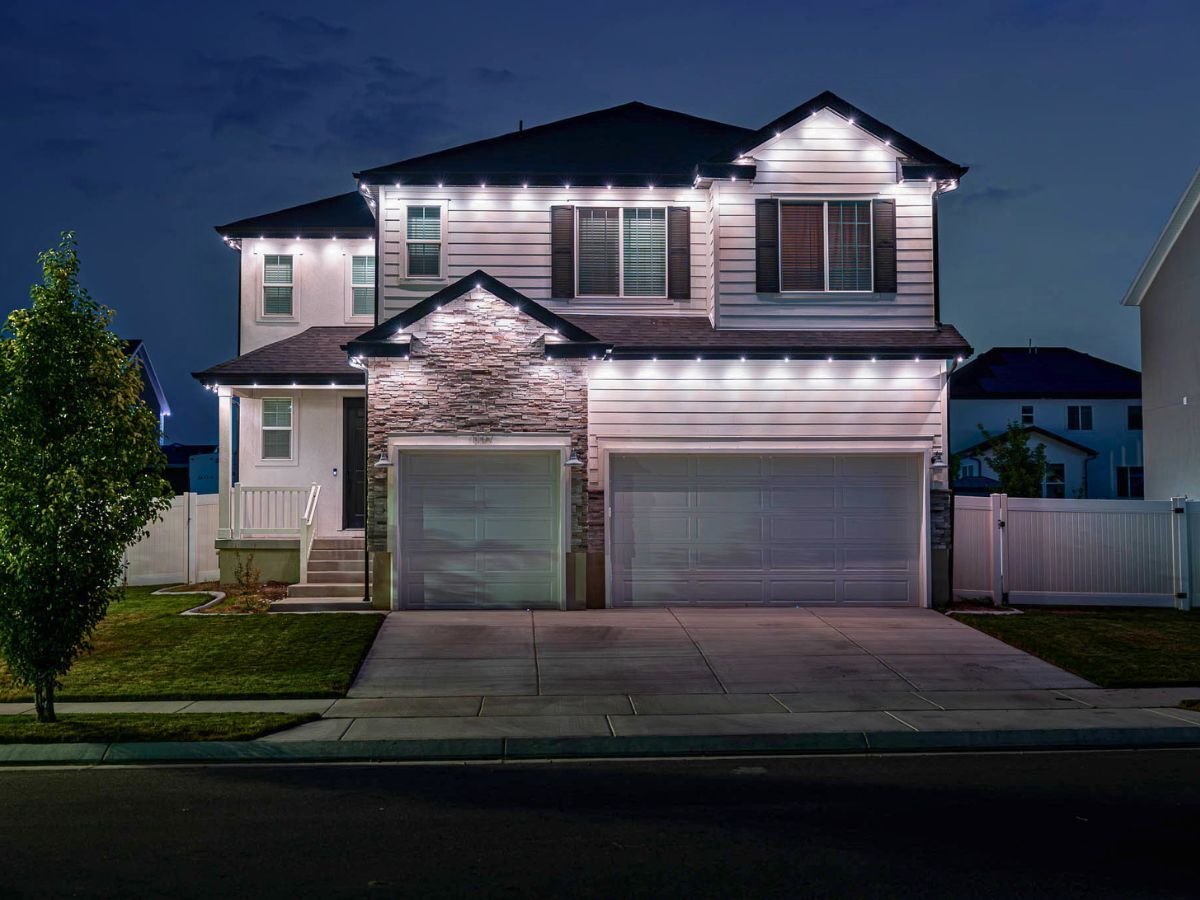
White, cream, and pale siding reflect a lot of light. That makes almost any color look brighter, but it also means the siding picks up the color of the lights. A bright pure white on a white house can look stark, or even a little blue, especially next to warm porch fixtures.
Warm white is the safest choice on light siding, both for Christmas and for everyday evenings. It reads as a soft, golden glow and makes the house feel inviting instead of clinical. For a festive look, red and green stand out sharply against white, and the contrast holds up even from down the block. Our roundup of popular Christmas light patterns has several red-and-green layouts that suit light siding.
If you prefer a cooler look, pair icy blue with white for a winter feel rather than running pure white alone. The blue gives the siding a gentle tint without bleaching it out.
Trimlight looks to try on a white house
- Warm white for a soft, classic glow
- Red and green for a traditional look with strong contrast
- Icy blue and white for a crisp winter theme
- Red alternating with warm white for a candy cane effect
Gray Siding
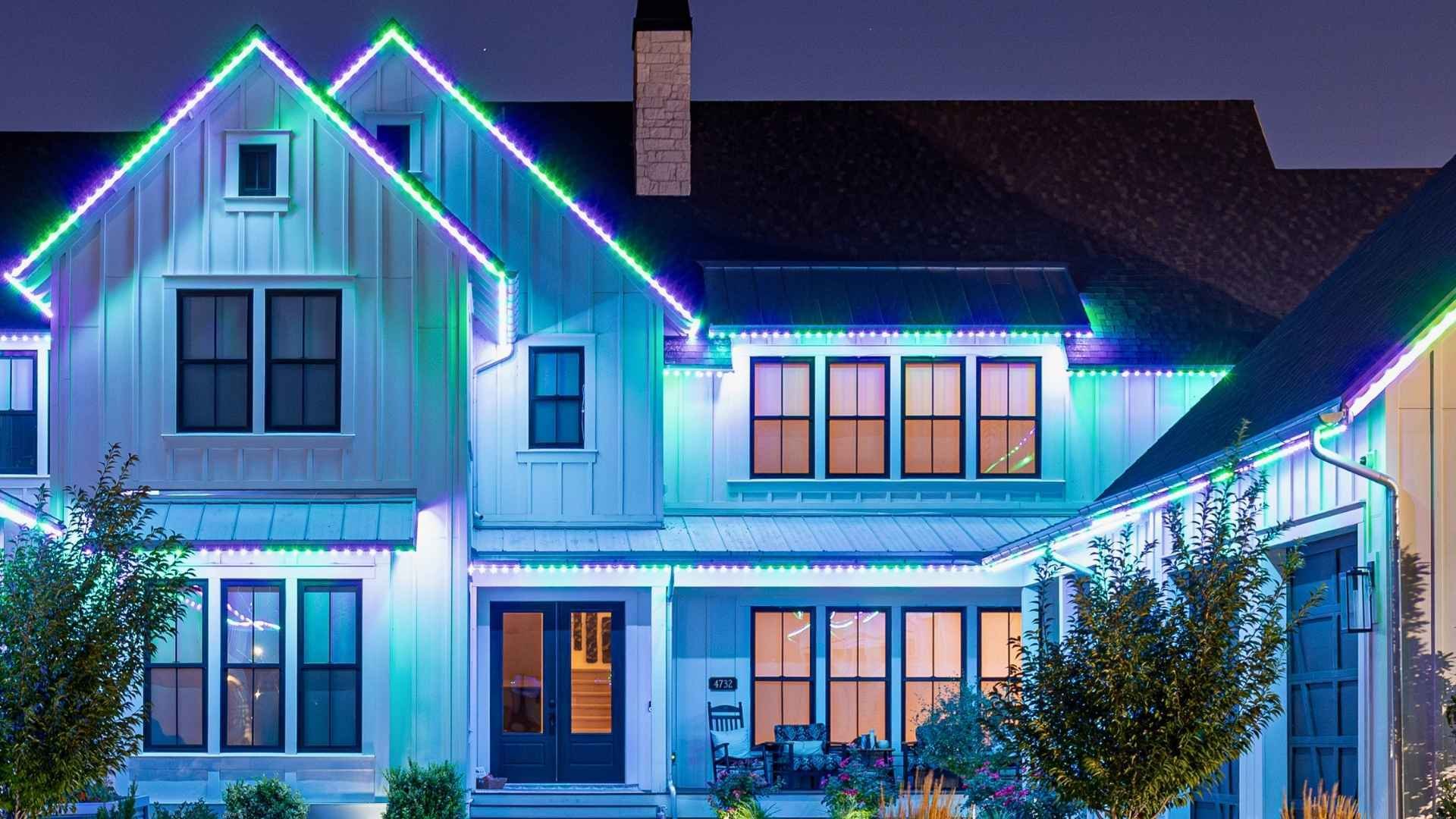
Gray is the trickiest exterior because the word covers a wide range. Cool grays with blue or green undertones look sharp under cool white and icy blue, which match the modern feel many gray homes already have. Warm grays and greige lean toward beige, and they look better with warm white or soft gold, which bring out that warmth instead of fighting it.
Not sure which gray you have? Hold a sheet of plain white printer paper against the siding in daylight. If the siding looks bluish next to the paper, it's a cool gray; if it looks tan or brownish, it's warm. Red and green work on either, though a deeper green usually looks richer on cool gray than a bright lime shade.
Trimlight looks to try on a gray house
- Cool white or icy blue on cool gray
- Warm white or soft gold on warm gray and greige
- Blue and white for a modern winter look
- Red and deep green for a classic Christmas display
Red Brick
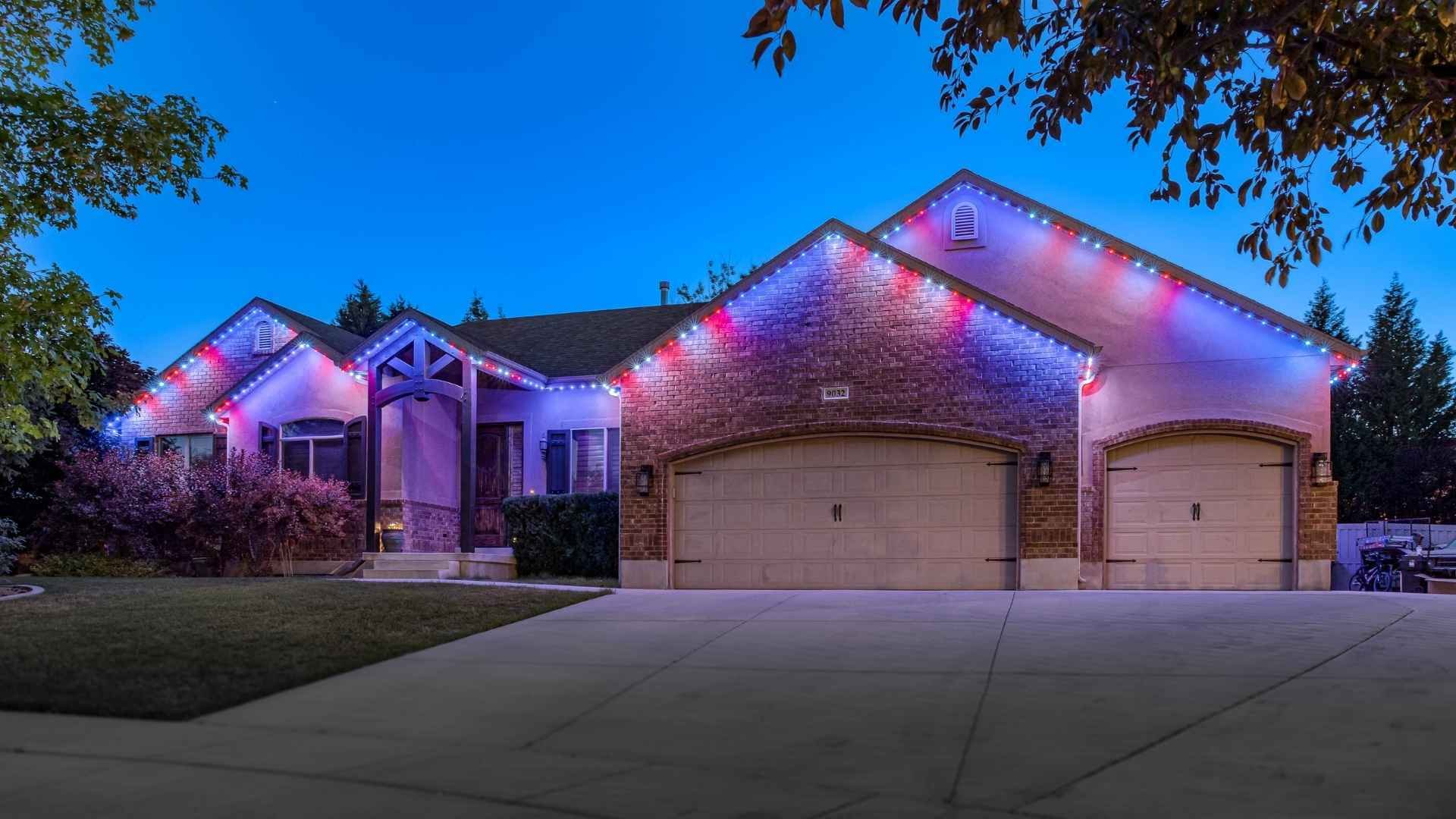
Red and orange brick absorbs more light than painted siding, and its texture breaks the glow into soft highlights and shadows. Warm colors work with that texture. Warm white and amber make brick look rich and traditional, almost like candlelight across the masonry.
Red on red brick is where homeowners most often get surprised. Red lights can blend into the brick and lose definition, so pair red with warm white or deep green to keep the roofline crisp.
Cool blues and stark white can look harsh against warm brick tones. If you love a blue look, try it on a test night and compare it side by side with warm white before committing for the season.
Trimlight looks to try on a brick house
- Warm white or amber for a timeless, cozy look
- Gold and deep green for an elegant holiday palette
- Red alternating with warm white so the red doesn't disappear into the brick
- Green with warm white accents for a traditional look with more contrast
Painted or Whitewashed Brick
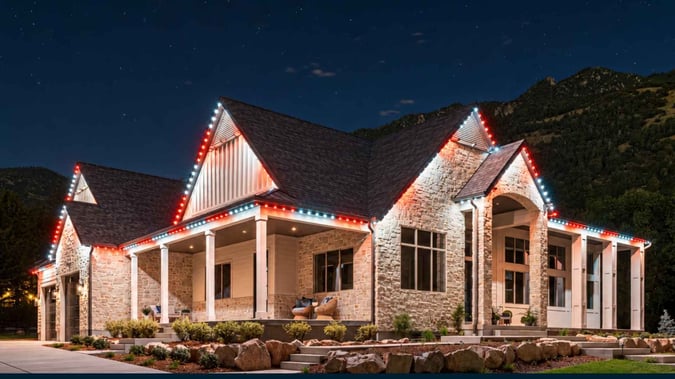
Painted and whitewashed brick behaves more like white siding than like natural red brick, because the lighter surface reflects far more light. Start with the white-siding pairings above, keeping in mind that the brick texture still casts small shadows, which softens bright colors and gives twinkle effects extra depth.
Stone, Tan, and Beige Exteriors
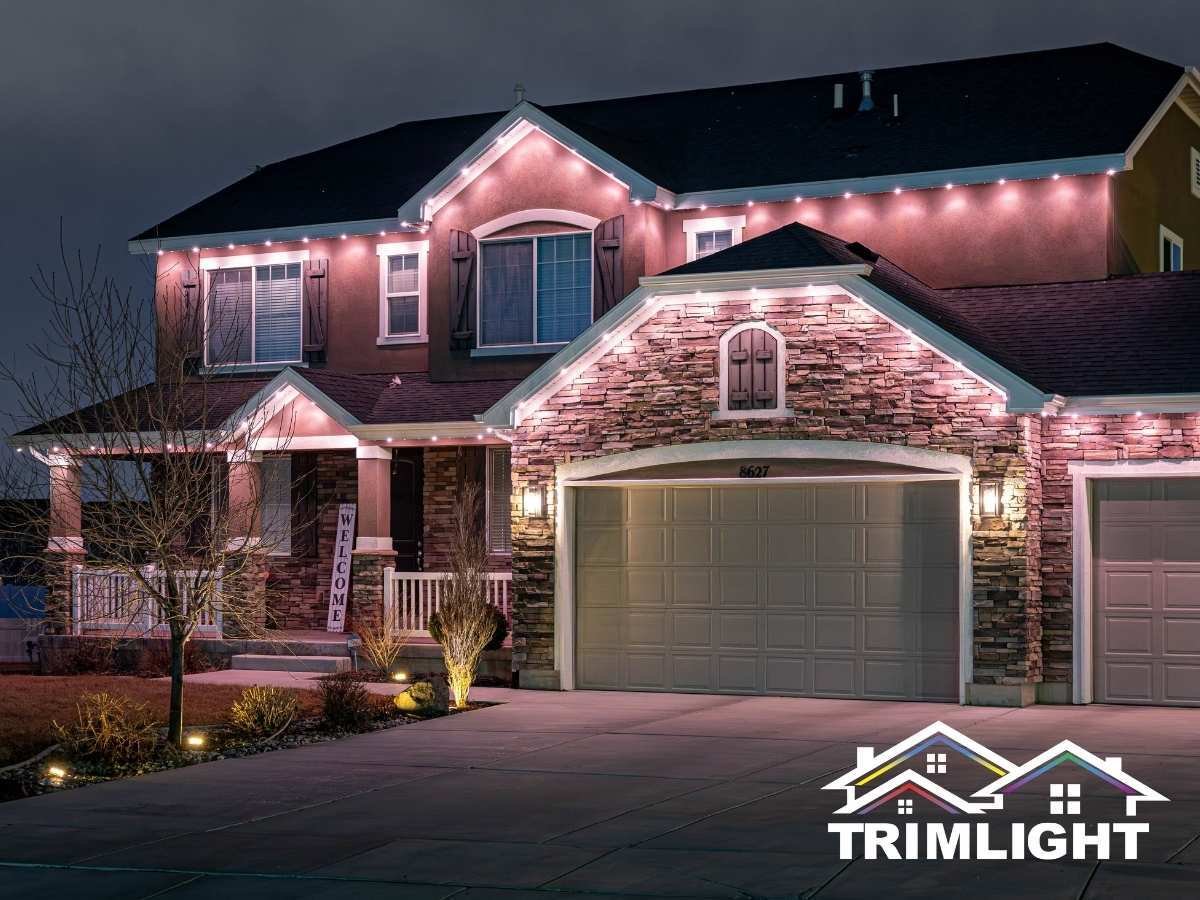
Stone veneer, tan stucco, and beige siding sit in the warm family, so they respond to warm white, gold, and amber much like brick does. Mixed stone with both gray and brown tones can go either way, so test a warm white and a cooler white before deciding.
Because these exteriors are neutral, they make a forgiving canvas for multicolor looks. Red, green, and gold together look festive without clashing with the house.
Trimlight looks to try on stone or tan
- Warm white or gold
- Red, green, and gold together
- Amber with warm white accents
Dark Siding: Navy, Charcoal, and Black
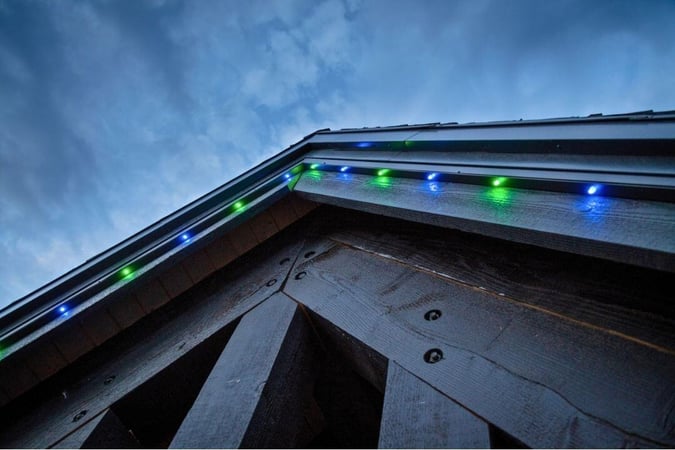
Dark exteriors reflect the least light, so the lights themselves become the star. Saturated colors like bright red, emerald green, and royal blue pop against navy, charcoal, and black, and a crisp white outline looks striking against dark paint.
RGB lights can't produce black, so the dark siding does that work for you, giving every color a strong backdrop. Our post on black and RGB lighting explains how dark surfaces, and lights switched off within a pattern, add contrast to a design.
For an everyday look on a dark home, warm white is hard to beat. It stays elegant and understated while still standing out clearly from the street.
Two-Tone and Mixed Exteriors
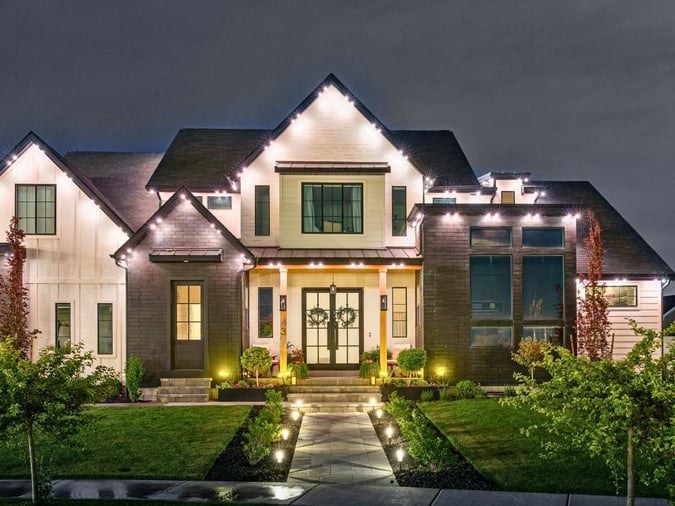
Plenty of homes mix materials: brick on the first floor with siding above, or stone wrapped around the entry and painted siding everywhere else. Because roofline lights sit at the top of the house, let the material directly under the roofline guide your first choice, then check how the glow spills down onto the second material.
Warm white is the easiest bridge between warm brick or stone and lighter siding, because it flatters both at once. If the two materials pull in opposite directions, such as cool gray siding over red brick, favor the material people see most from the street.
What Else Changes How Your Colors Look
Siding is the biggest factor, but it isn't the only one. A few details around the house can make the same color look completely different from one home to the next.
Trim, Fascia, and Roof Color
Trimlight's channel mounts along the trim, so the trim is the first surface the light touches. White trim brightens any color and spreads a little glow onto the siding below, while dark trim keeps the light tight and defined along the roofline.
In daylight, the Trimlight channel blends in because it's matched to your trim color, so whatever you run at night, the roofline still looks clean during the day.
Porch Lights and Landscape Lighting
Most porch fixtures use warm bulbs. If your roofline runs a cool white while the porch glows yellow, the house can look like it has two different lighting plans.
Matching the warmth of your roofline white to your porch fixtures, or swapping porch bulbs to match the roofline, makes the whole front feel intentional. The same goes for path lights and downlights: when every light on the front of the house shares the same warmth, the whole display looks planned.
For bold Christmas colors, this matters much less. Red and green read as decoration rather than as a competing white, so a warm porch light next to them barely registers.
Bulb Spacing and Viewing Distance
Bulb spacing changes how colors blend. Tighter spacing reads as a more continuous line of color, while wider spacing shows each point of light, which suits patterns that alternate colors. Trimlight roofline systems use 6, 9, or 12 inch spacing, chosen once for the whole house, and our guide to choosing node spacing covers which looks best from the street. Distance matters too: a house set far back from the road usually needs bolder, higher-contrast colors than one right at the sidewalk.
Snow on the Roof and Lawn
Fresh snow works like a giant reflector. Cool white and icy blue look even icier against it, which can be beautiful for a winter theme but a little cold for everyday evenings. Warm white and red and green feel cozier on snowy nights.
If you live where snow sticks around, check your favorite colors again after the first real snowfall. A palette chosen on a bare November night can look quite different once the yard and roof turn white.
How to Test Christmas Light Colors on Your Own House
With Trimlight, you never have to guess. A short testing routine over a few evenings will tell you more than any color chart or photo online.
Step 1: Start From the Street at Dusk
Colors look different from the driveway than from across the street, and they shift as the sky darkens. Test from where neighbors and guests actually see the house, starting around dusk and checking again once it's fully dark.
Trust your eyes over your phone's camera. Phone photos often shift colors, especially whites, so a shade that looks off on screen may look right in person.
Step 2: Change One Thing at a Time
Open the Trimlight Edge app, tap the palette icon in the bottom left, and start with a single color across the whole roofline. Compare warm white, pure white, and one bold color before trying combinations, so you can see how each reads on its own. For exact values, including the warm white many homeowners start with, see the Trimlight RGB color codes page.
Step 3: Choose Colors Before Adding Motion
Motion effects like twinkle, chase, and firework change how colors come across. Settle on your palette with a static display first, then layer in motion once you like the colors.
Scale matters here, too. A pattern that alternates colors can look busy on a short roofline and perfect on a long one, so judge it on your own home rather than from a picture of someone else's.
Step 4: Save Your Favorites and Live With Them
When you find a look you like, save it in the app with "save as" so you can return to it anytime. If you fine-tune a saved look later, "cover" overwrites the original instead of creating a duplicate.
Give each finalist a few nights. A color that impressed you on the first evening may feel too bright or too cool by the third, and one that seemed plain may grow on you.
Once you've settled, put it on a schedule so it comes on every evening without anyone touching a switch. For a full walkthrough of the app, see our Trimlight Edge app guide.
Why Trimlight Makes Choosing Christmas Colors Easy
Picking colors only stops being stressful when you're free to change your mind, and a Trimlight system is built around exactly that.
16 Million Colors on One System
Every Trimlight RGB system can mix 16 million colors, from soft warm whites to deep, saturated reds and greens. Our breakdown of what 16 million colors means shows how much range that gives you on a single roofline.
Looks That Change With Every Holiday
A Christmas palette isn't a one-season commitment. The same Trimlight roofline can move from Halloween orange to red and green in a few taps, then back to everyday warm white in January, as our post on switching from Halloween to Christmas shows.
That means the colors you choose for your siding can follow the calendar while still looking matched to your house.
A Clean Roofline, Day and Night
The patented channel is matched to the color of your trim, and the IP68-rated bulbs inside it are built to keep out water and dust. The result is a roofline that looks tidy by day and is ready for whatever color you pick next.
The Company That Started Permanent Holiday Lighting
Trimlight pioneered permanent holiday lighting in 2010, and today more than 300 authorized dealers install systems planned around each home's roofline.
Every system is covered by a lifetime warranty on parts, and authorized dealers back the installation with at least one year of labor coverage.
Frequently Asked Questions
What color Christmas lights look best on a white house?
On a Trimlight system, warm white and classic red and green look best on most white houses, since white siding reflects so much light that pure white can look stark or slightly blue.
What color Christmas lights look best on a brick house?
Trimlight's warm white, amber, gold, and deep green looks bring out the warm tones of red brick while keeping the roofline clearly defined.
What color lights look best on a stone or tan house?
Warm white, gold, and amber complement stone and tan exteriors, and a red, green, and gold mix looks festive without clashing.
What color lights stand out most on a dark house?
Bold, saturated Trimlight reds, greens, and blues, along with a crisp white outline, stand out most against navy, charcoal, or black siding.
What color Christmas lights look best on a blue house?
Light blue siding pairs well with cool white for a crisp winter look or warm white for contrast, while navy homes suit bold, saturated colors.
Does bulb spacing change how colors look?
Yes, closer spacing makes color look like a solid line, while more space between bulbs lets each one stand out, which suits alternating patterns.