7 min read
Three numbers show up on almost every Trimlight quote: 6, 9, and 12 inches. They describe how far apart each diode sits inside the channel, and that spacing changes how a roofline actually looks once it's lit up more than almost any other choice on the list. The bulb, the channel, and the app stay the same no matter which number gets picked; spacing is the one variable that decides whether the finished look reads as a solid wall of color or a string of individually visible points.
This piece breaks down what each spacing option looks like in practice, where each one tends to fit best, and what else is worth factoring in, cost, roofline length, and getting a definitive answer, before landing on one. It also covers the parts of this decision that are easy to assume wrong, like thinking spacing can be mixed across one home or adjusted after installation, since neither is actually the case.
Key Takeaways:
- Node spacing is the distance between each diode inside the channel: 6, 9, or 12 inches, which works out to 15.24, 22.86, and 30.48 centimeters.
- 6 inch spacing creates the most continuous, saturated wall-splash effect, and tends to be favored for a bold, fully-lit look.
- 9 inch spacing is Trimlight's most commonly chosen option, balancing a connected look with more visible separation than 6 inch spacing.
- 12 inch spacing spreads the light out the most, which some homeowners pick for a classic, wider-spaced holiday look and others pick to highlight specific architectural features.
- Closer spacing means more bulbs across the same run, which can affect where a project lands within Trimlight's typical per-linear-foot pricing range.
- An authorized dealer can show physical samples of all three spacings, which settles the choice faster than judging it from photos alone.
Choosing Between 6, 9, and 12 Inch Node Spacing: Overview
All three spacing options use the same bulb, the same patented channel, and the same app control. The only variable is how far apart each diode sits, which changes the density and character of the light itself, not the technology behind it. That single variable ends up doing more to define the finished look than the color, the pattern, or even the brand of controller running it.
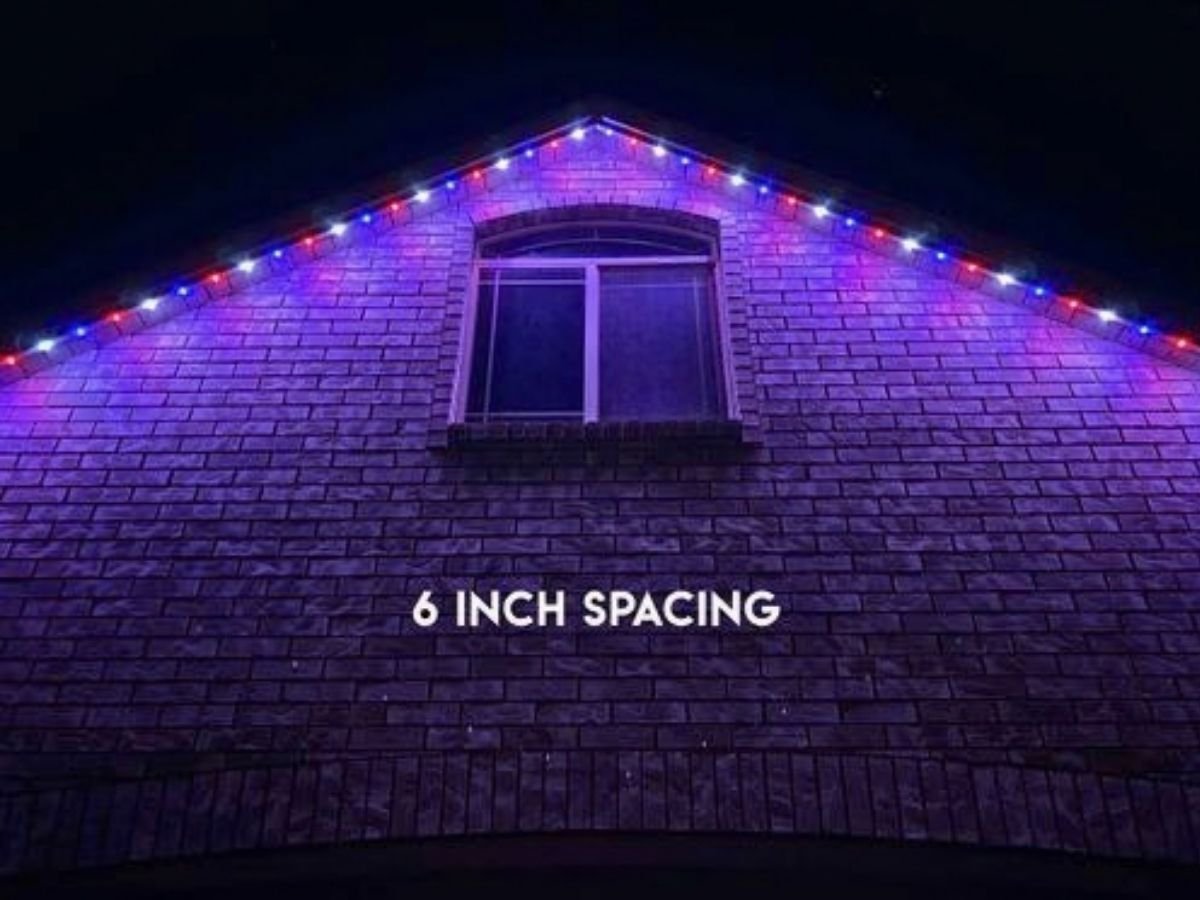
6 Inch Spacing
With bulbs set closer together, 6 inch spacing brings a strong sense of cohesion to the display. The wall splash from each bulb overlaps enough with its neighbors to read as one seamless, continuous stream of light rather than a series of individual points.
That density also changes how animated patterns behave. A chase or twinkle effect moves through closely packed bulbs with very little visible gap between each step, so motion reads as fluid rather than a series of distinct hops from point to point. Ranch-style homes and other single-story houses with long, uninterrupted rooflines tend to show this off well, since there's more continuous run for the density to fill.
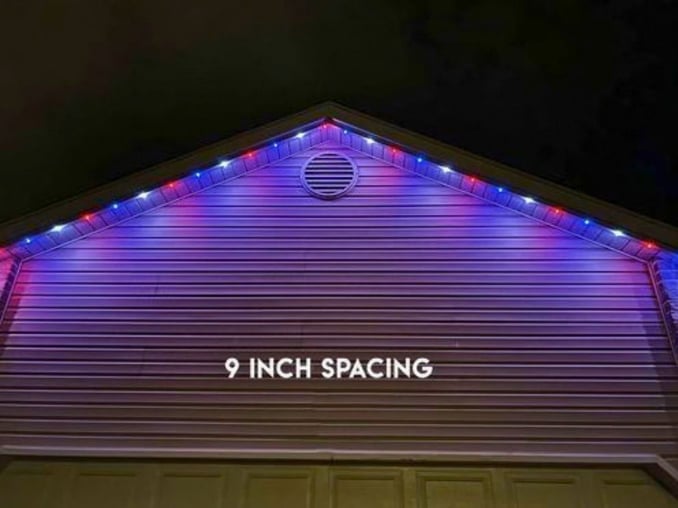
9 Inch Spacing
The slightly wider gap at 9 inches still reads as a connected, well-distributed line of light from a normal viewing distance, while using fewer bulbs than the 6 inch option over the same run. It's the spacing most Trimlight clients land on.
Patterns still read cleanly at this spacing. Chase and twinkle effects stay smooth enough that most people watching from the street won't notice individual gaps in motion, while using noticeably fewer bulbs than the 6 inch option. It's a spacing that tends to suit almost any home style, from traditional two-story colonials to more modern builds, which is part of why it ends up being the starting recommendation for homeowners who haven't seen samples yet.
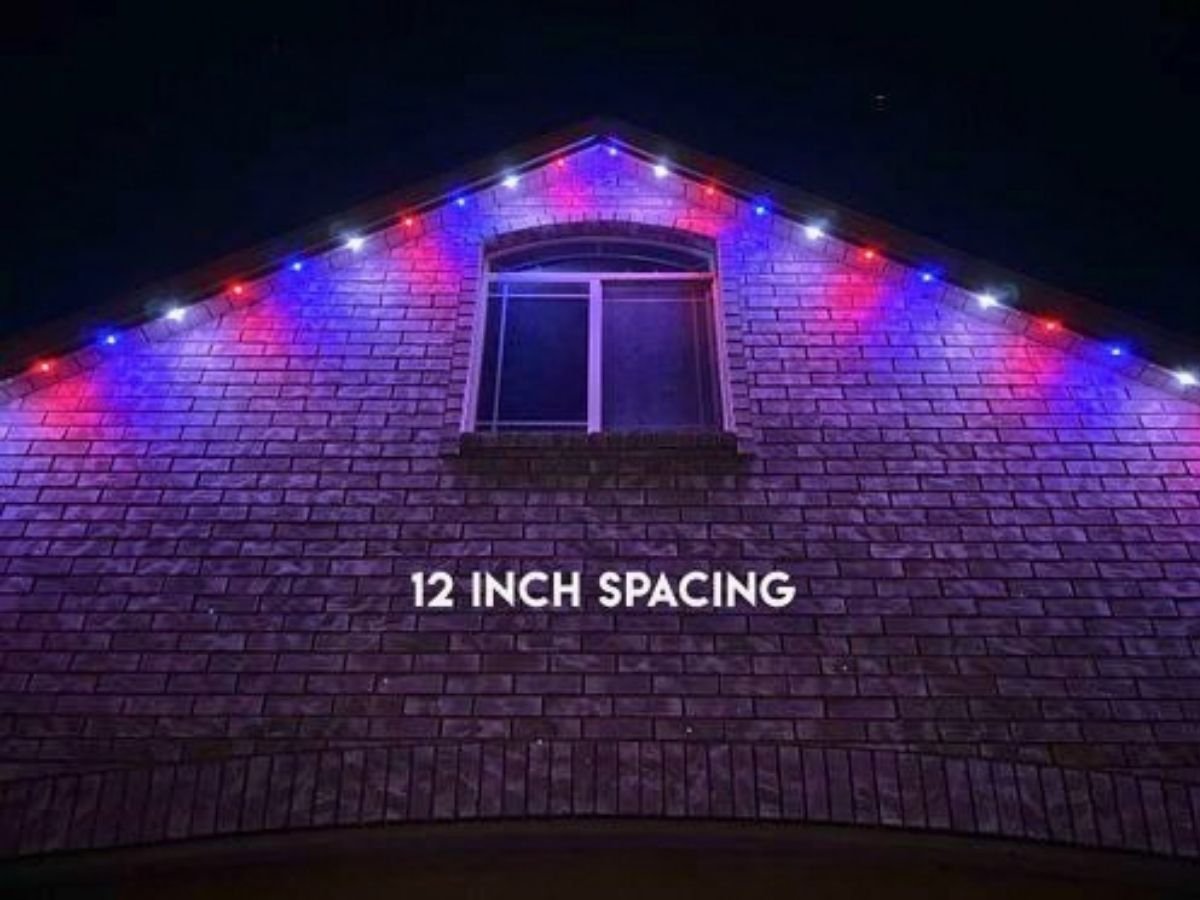
12 Inch Spacing
At 12 inches, the gaps between bulbs become part of the design rather than something to minimize. Some homeowners choose it specifically because the wider spacing echoes the look of classic, old-fashioned holiday string lights. Others choose it to let individual architectural lines and features stand out rather than blur into a solid band of light.
Animated patterns look different at this spacing too. A chase effect reads as a series of distinct points moving one at a time rather than a continuous sweep, which some homeowners like specifically because it looks closer to traditional incandescent bulbs blinking in sequence. Homes with strong architectural lines, deep gables, dormers, a covered porch with visible trim, tend to benefit most from the wider spacing, since it leaves room for those features to show through rather than disappearing behind a dense wall of light.
Choosing Between 6, 9, and 12 Inch Node Spacing: In-Depth Comparison
The three spacings look different in a brochure photo, but a few other factors shape how obvious that difference actually is on a specific house. Roofline shape, the pattern being run, and the style of the house all change how much that difference actually shows up once the lights are on.
How Roofline Length and Viewing Distance Change the Math
A gap that looks noticeable from six feet away on a short garage-front run can all but disappear on a long roofline viewed from the street or the end of a driveway. Distance naturally blends individual points of light together, which is why the same 12 inch spacing that looks scattered up close can read as a smooth, elegant line from farther back.
The reverse is also true. A short, prominent run near an entryway, somewhere a guest will actually stand close to, tends to show more benefit from the tighter density of 6 or 9 inch spacing than a long back roofline no one gets within thirty feet of.
A single-story ranch with a 150 foot roofline viewed from across the street behaves differently than a two-story home with a short, 30 foot front-facing gable viewed from the driveway. On the ranch, the sheer length of the run and the distance most people view it from does a lot of the blending work on its own, which is why 12 inch spacing often looks perfectly continuous there. On the shorter, closer gable, the same spacing can look noticeably more broken up, simply because there's less length for the eye to average over and less distance for it to blend at.
How Spacing Reads Across Patterns and Colors
Node spacing doesn't just change how a solid color looks. It changes how the Trimlight Edge app's other pattern options read once they're running. The app's motion library includes static color, twinkle, chase, and firework effects, and each one interacts with spacing differently.
A twinkle effect, which adds a flicker across the run, tends to look busier and more textured at 6 inch spacing, since there are simply more points that can flicker independently in a given stretch of roofline. At 12 inch spacing, the same effect reads as more sparse and deliberate, since each flicker is more visually isolated from the ones around it. A chase pattern shows the starkest difference: tightly packed bulbs make the motion look like a continuous wave of color sweeping along the roofline, while widely spaced bulbs make it read as a sequence of individual points lighting up one after another, closer to how old-fashioned incandescent chase lights used to look.
Matching Spacing to Your Home's Architecture
Beyond personal taste, the shape and style of a house plays a real role in which spacing tends to look best. Homes with long, simple rooflines and few interruptions, ranch-style houses, modern builds with clean horizontal lines, tend to suit 6 or 9 inch spacing well, since there's a continuous run for the density to fill without competing against a lot of architectural detail.
Homes with more going on architecturally, multiple gables, dormers, a covered front porch with visible trim, decorative brackets, tend to work well with 12 inch spacing, since the wider gaps leave room for those features to remain visible rather than getting visually flattened by a dense band of light. None of this is a hard rule. It's a starting point for the kind of conversation worth having with a dealer, who can look at the actual roofline in question rather than a general style category.
What Spacing Does to the Price
Closer spacing means more bulbs across the same length of channel, which is one of the variables that can move a project toward either end of Trimlight's typical $18 to $35 per linear foot range. A dealer quote will reflect the actual spacing chosen rather than a flat rate that ignores it. For a rough sense of scale, a 100 foot roofline works out to roughly 200 bulbs at 6 inch spacing, about 133 bulbs at 9 inch spacing, and about 100 bulbs at 12 inch spacing. That difference in bulb count, not a different bulb or a different labor process, is what shifts a project up or down within the typical per-linear-foot range.
One Spacing for the Whole System
Node spacing is an all-or-nothing choice. A home runs on a single spacing across the entire system, 6, 9, or 12 inches, not a mix of two depending on the section of roofline. That single-spacing rule applies across the entire property, front, back, and any secondary structures like a detached garage or pool house included in the same job. Because the bulbs also sit at fixed intervals when the channel is built, spacing is a decision made once, at installation, rather than something adjusted afterward the way a color or pattern can be through the app.
The Spacing Decision Is Easy to Get Right, and Hard to Change Later
Color, pattern, and brightness are all things that get adjusted after the fact through the app, on a whim, as often as anyone likes. Node spacing isn't one of those choices. It's baked into the channel at installation, which makes it worth more than a passing thought before a dealer shows up to measure the roofline.
The fastest way to settle it isn't a photo comparison online. It's asking a local authorized dealer for a look at physical samples of all three, which turns an abstract measurement into something obvious the moment it's standing in front of a house.
That conversation is also the right moment to bring up how the home is shaped, whether it's a single long run or a mix of gables and dormers, and what the lighting will mostly be used for, a fully saturated holiday look versus a subtler accent through the rest of the year. None of that changes the bulb, the channel, or the technology behind the install. It just narrows down which of the three numbers actually fits the house standing in front of the dealer, rather than the one that looked best in a photo online.
FAQs: Permanent Outdoor Lighting vs DIY Smart Lights
Which node spacing is the most popular choice?
9 inch spacing is the option most Trimlight clients choose, since it balances a connected look with a lower bulb count than 6 inch spacing.
Does closer spacing cost more than wider spacing?
Yes. More bulbs across the same run is one of the factors that affects where a project lands within Trimlight's typical per-linear-foot pricing range.
Is 12 inch spacing too sparse for a fully lit holiday look?
Not necessarily. Some homeowners choose 12 inch spacing specifically because the wider gaps echo the look of classic, old-fashioned holiday string lights rather than a solid modern band of color.
Is there a default spacing if I don't have a preference?
There isn't one universal default. A dealer typically suggests a starting point based on the roofline and the look being described, but the final choice is yours.
Should spacing be chosen based on how the house looks during the day or at night?
Mainly night. Daytime appearance comes from the channel's color match to the fascia, not the bulb spacing, so spacing is really a decision about how the lighting reads once it's on.
Roughly how many bulbs does a typical 100 foot roofline need?
About 200 bulbs at 6 inch spacing, 133 at 9 inch spacing, or 100 bulbs at 12 inch spacing, since the spacing directly determines how many bulbs fit into a given length of channel.